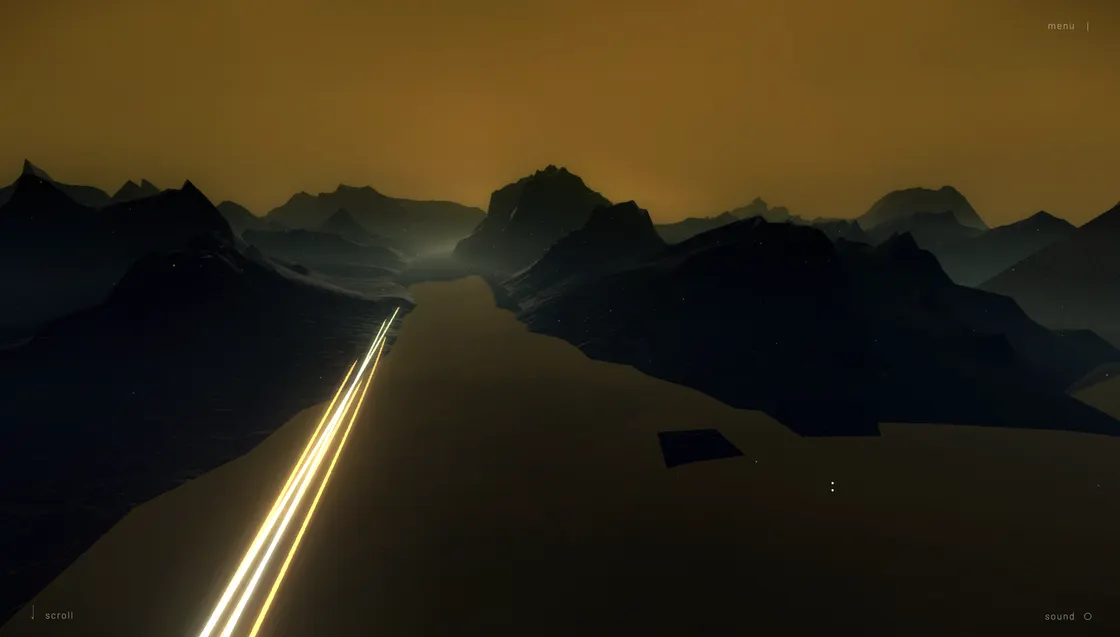
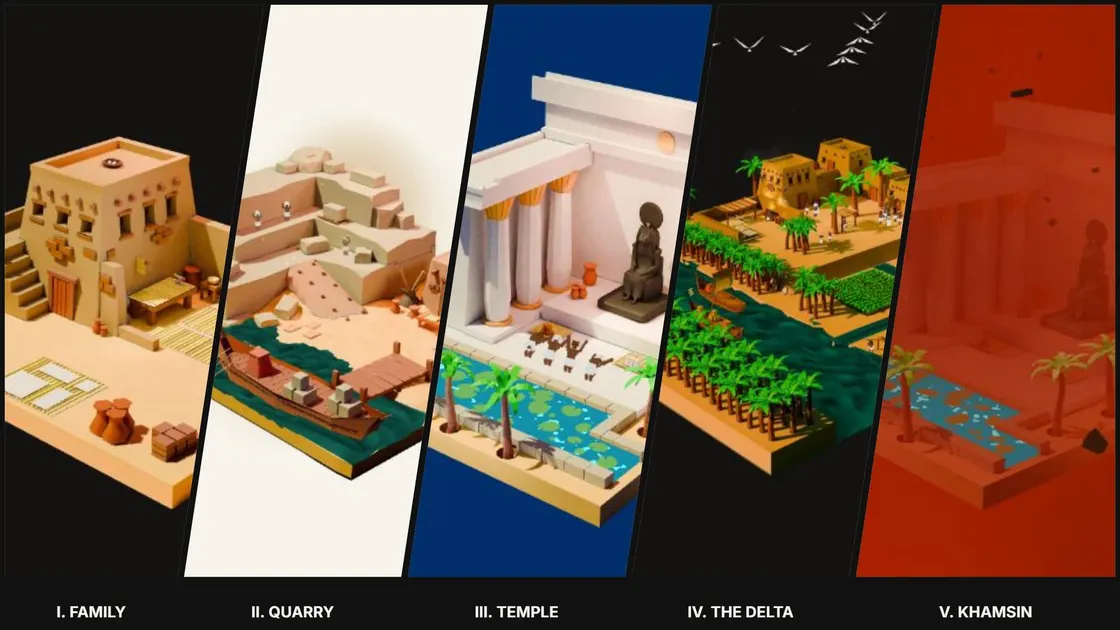

Edolus Turns AI Infrastructure Into a Cinematic WebGL Journey Edolus moves from orbital satellites and desert-scale systems into glowing data flows, using PlayCanvas, WebGL, custom GLSL, and evolving sound to turn AI infrastructure into a cinematic journey.
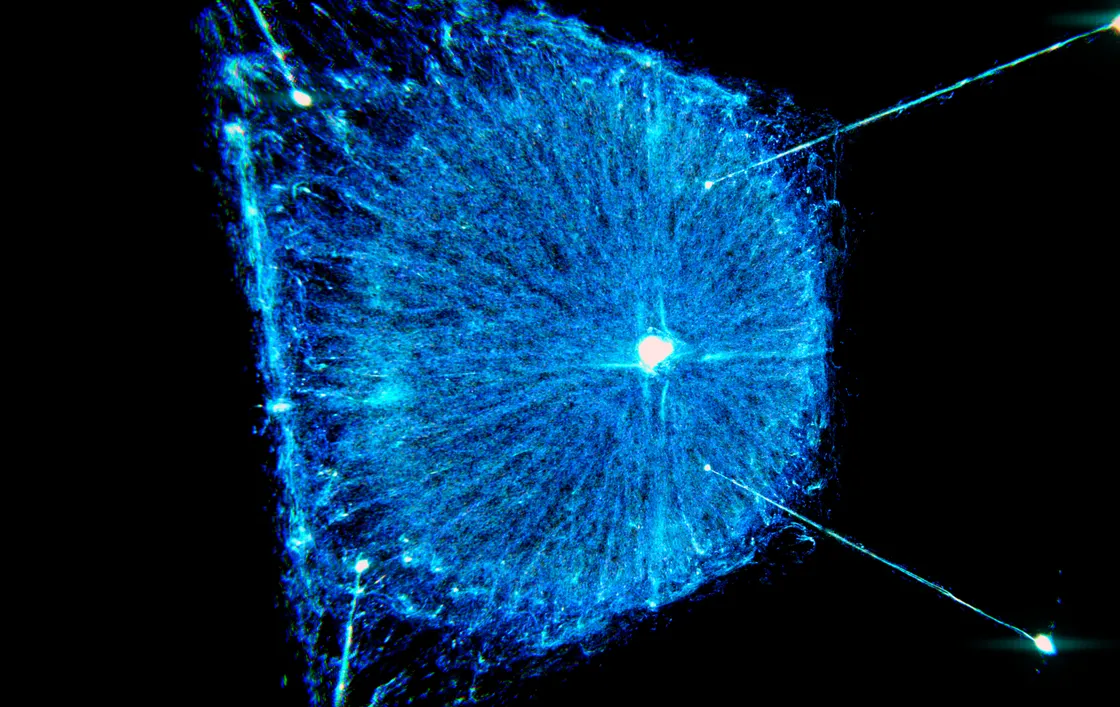
3D Life Sim Turns Artificial Life Into a WebGPU Instrument Aaron Lemke's 3D Life Sim is an open-source WebGPU particle life simulation with live audio input, MIDI mapping, presets, and cockpit controls for exploring emergent forms.
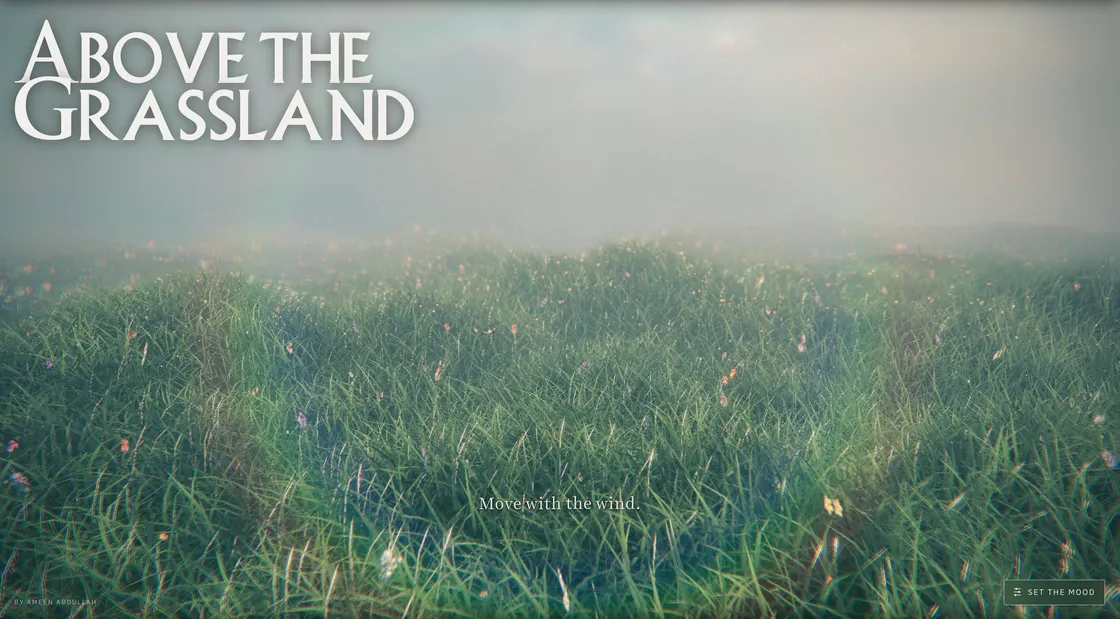
Above the Grassland Builds a Cinematic WebGPU Field Ameen Abdullah’s Above the Grassland is a browser cinematic with WebGPU postprocessing, moving grass fields, weather presets, audio, narration, subtitles, and mood controls.
ASTRODITHER Turns Audio Into WebGPU Signal Noise Robert Borghesi’s ASTRODITHER is an audio-reactive Three.js WebGPU experiment using TSL, fluid simulation, bloom, dithering, and time-warped signal noise.
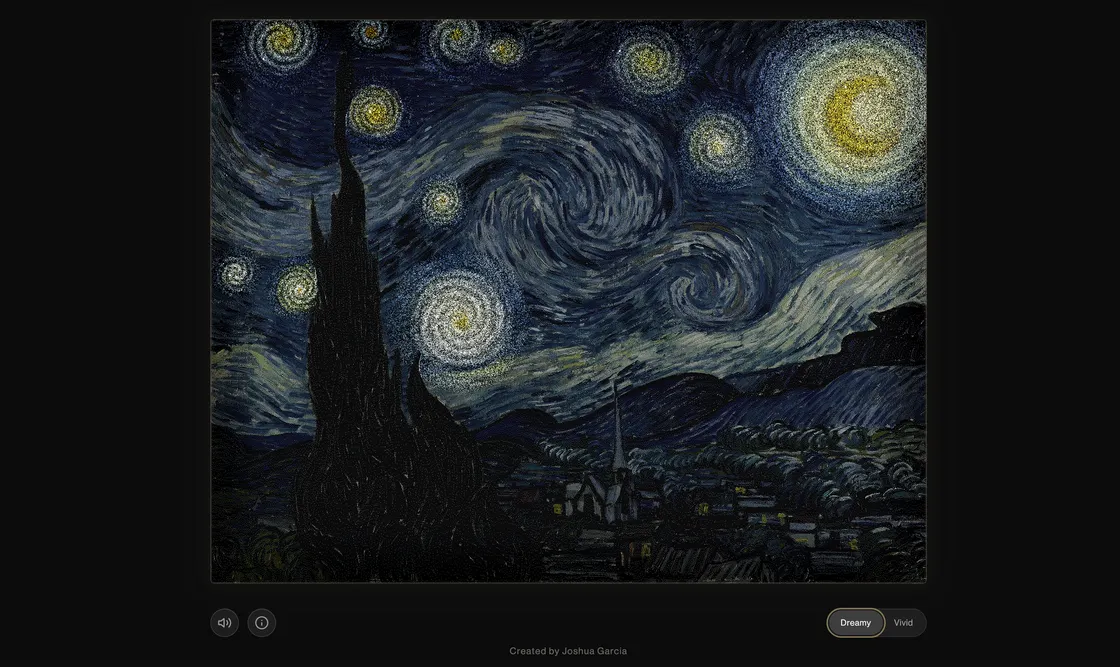
Still Night: Play Van Gogh's Starry Night as a WebGL Instrument Van Gogh's Starry Night, rebuilt as a point cloud you can play. Touch a bright swirl and it answers high; the dark hills drop low. Brushstrokes drift along Van Gogh's own paths, and five regions form a Tone.js orchestra. You play the painting to make the music.
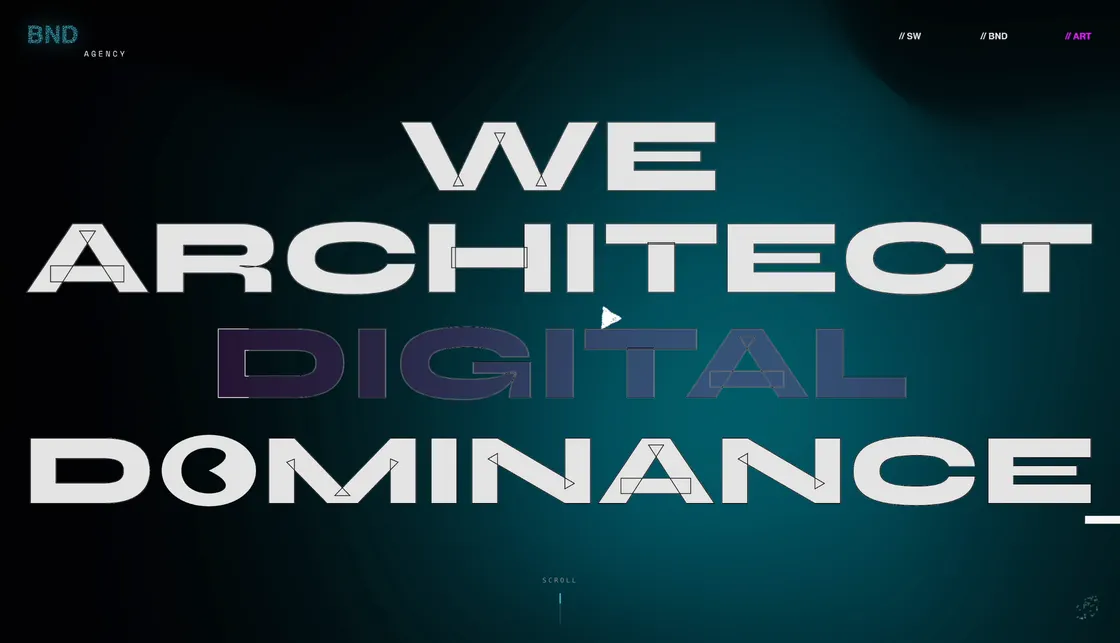
BND Agency: An Agency Portfolio Built as a Showroom Doan Bao Nam rebuilt the agency portfolio as a showroom you move through, not a page you scroll. Interactive 3D canvases and a custom audio-visual engine share a single frame, holding 60 FPS while sound and geometry run at once. Open devtools and watch how it stays steady.
Artisans d'Idées: Treats Shadow as a Material Open Artisans d'Idées and you get a black screen with one instruction: click to illuminate. What follows is a horizontal Three.js journey rendered almost entirely in shadow, with audio coupled to camera state instead of a clock. Built by Paris studio Immersive Garden. Worth opening devtools for.
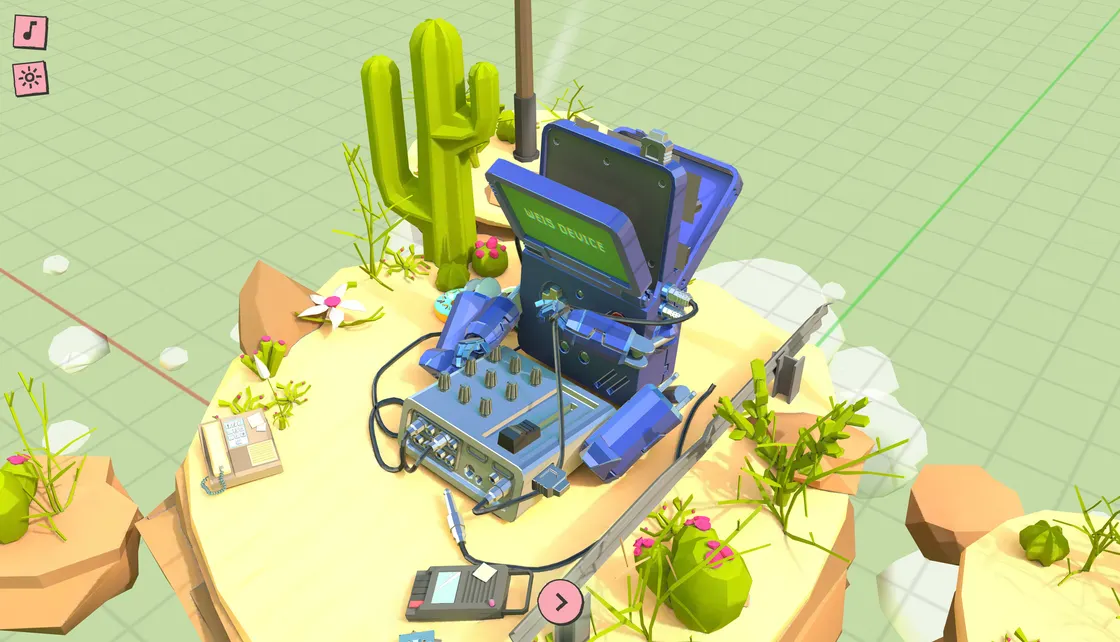
Weisdevice: A Glitchy Three.js Island With a Playable DJ Deck Wei's portfolio drops you on a tiny island with a half-broken robot, a Gameboy, and a DJ deck that refuses to play clean loops. Three.js with GLSL and GSAP up top, smart performance choices underneath: raycasting at 30 FPS, render loop paused on inactive views, assets tiny and lazy-loaded.
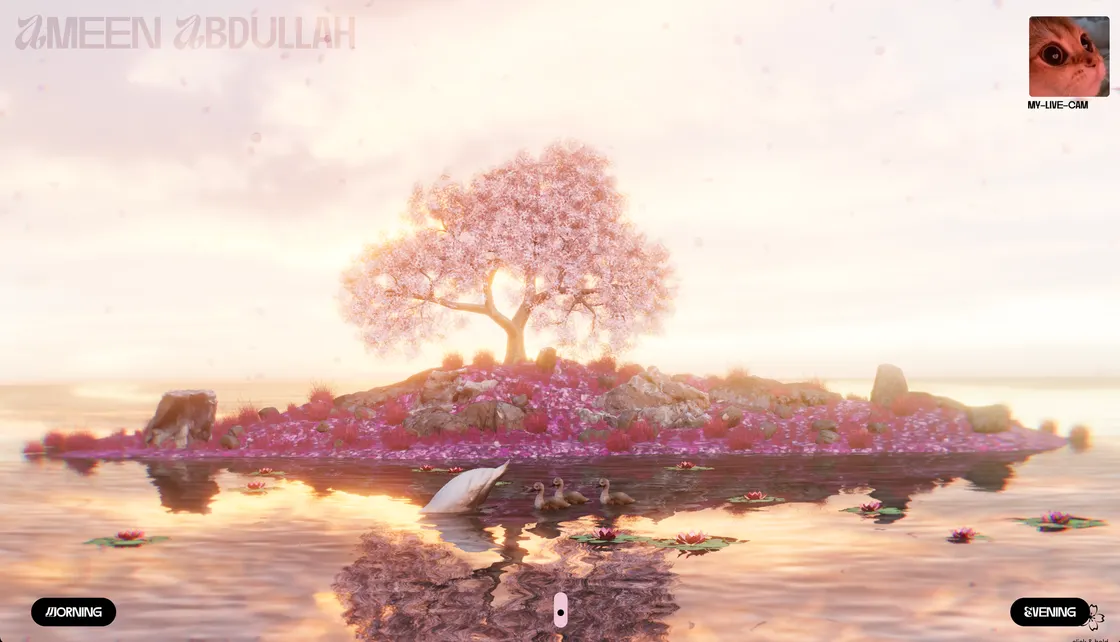
Ameen Abdullah's Portfolio Turns the Browser Into a Stage A WebGPU sakura scene anchors the hero, Vue drives the page, and a second WebGL layer paints mini scenes into textures aligned with the DOM. Off-screen blocks pause their work. Subtitles arrive in Japanese. A portfolio that behaves like a place rather than a CV.
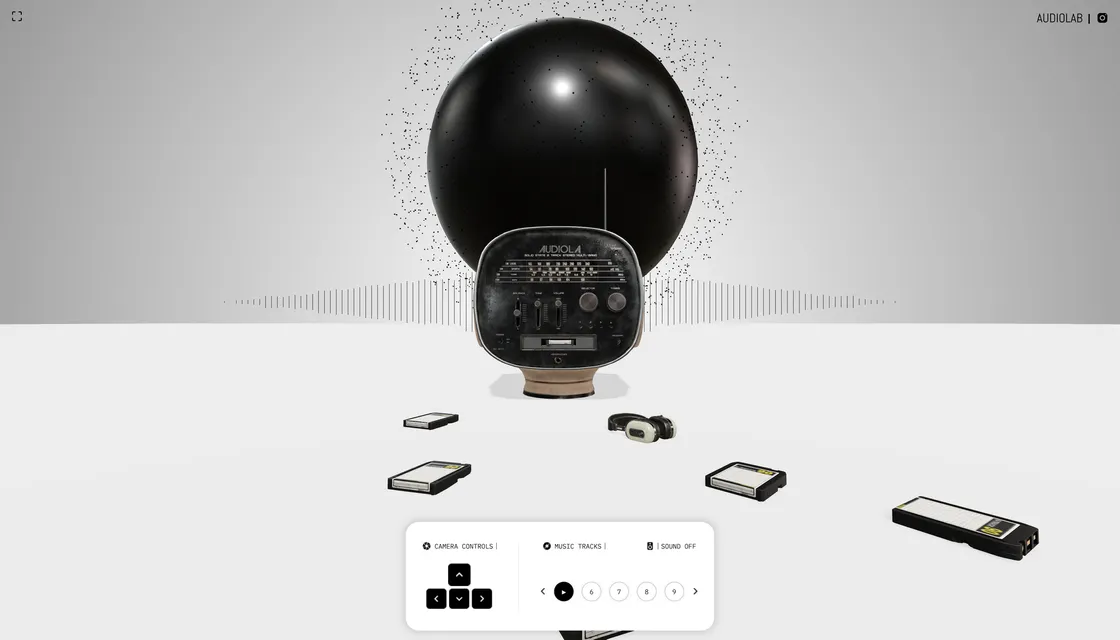
AUDIOLAB: A React Three Fiber Audio Visualizer Built Like a Radio AUDIOLAB is Abel Gudino's audio visualizer dressed as a radio. Load a track, watch the geometry react. React Three Fiber handles the scene while React owns the playback state, so the FFT data and the UI share one coherent tree instead of fighting over it.
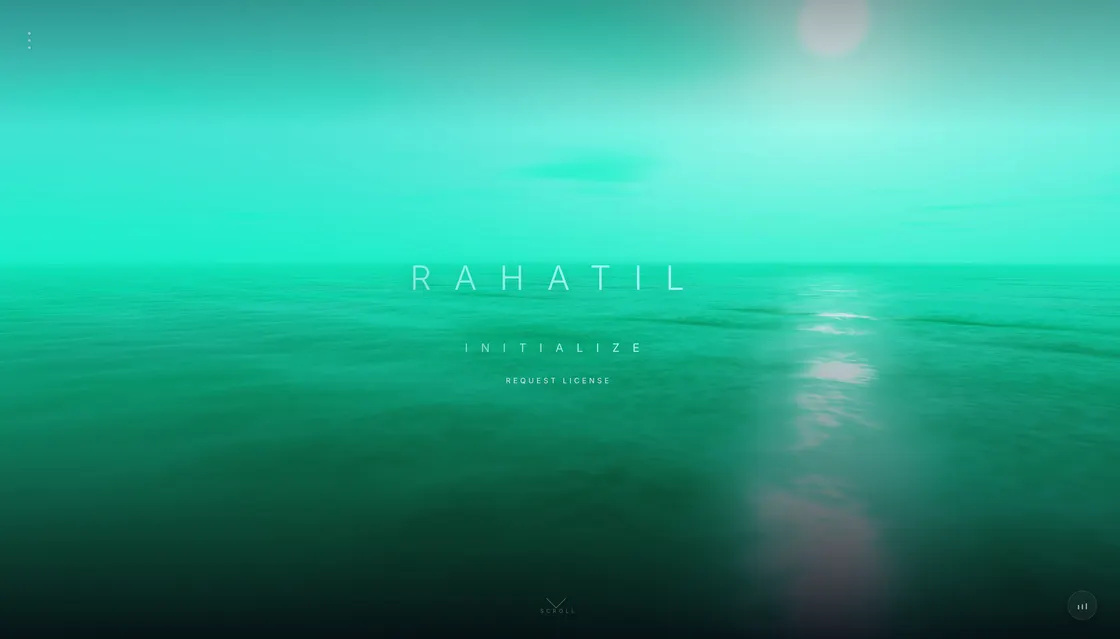
Rahatil & Co: A 300KB Creative Site Built to Hold 60fps on Modest Hardware Rahatil & Co spent 500 hours making a creative-category site that detects your hardware and adapts on the fly. Zero dependencies, under 300KB, and a hidden admin panel that redeploys the whole thing globally in under a second.
Find Your Way to Oz: The 2013 Chrome Experiment UNIT9 built a full Kansas carnival in WebGL for Disney, then destroyed it with a tornado shader borrowed from neuroscience. No physics engine. No framework. Just clever faking, spatial audio, and a three-month deadline. The source is open.
DRIFT: A Million Particles, a Lost Astronaut, and AI-Generated Loneliness A lost astronaut records his diary in your browser. Over a million GPGPU particles shift with his mental state while AI generates fresh text and voice each visit. Ming Jyun Hung built something that feels alive and a little heartbreaking.
Penderecki's Garden: A Point-Cloud Memorial Built Using Photogrammetry Huncwot turned billions of drone-captured particles into a navigable WebGL garden for composer Krzysztof Penderecki. Custom GLSL shaders breathe with the music. Fully keyboard-accessible. One of the most ambitious Three.js projects we've seen.
Spacetime in Your Browser: A General Relativity Sandbox Built with BabylonJS Drop planets onto a deformable spacetime grid and watch gravity warp the mesh in real time. Built with BabylonJS and Ammo.js physics, Hitesh Sahu's simulation turns the rubber-sheet analogy into something you can actually play with. Collision sounds included.
Molazone: A Rotating World Built Like a Vinyl Record for Yamê's Album Studio 9P built Yamê's album site on a spinning disc in Three.js. The motorcycle stays still while Blender environments rotate underneath, cell-shaded to look like Moebius comic panels. There's even a mini-game hidden inside.