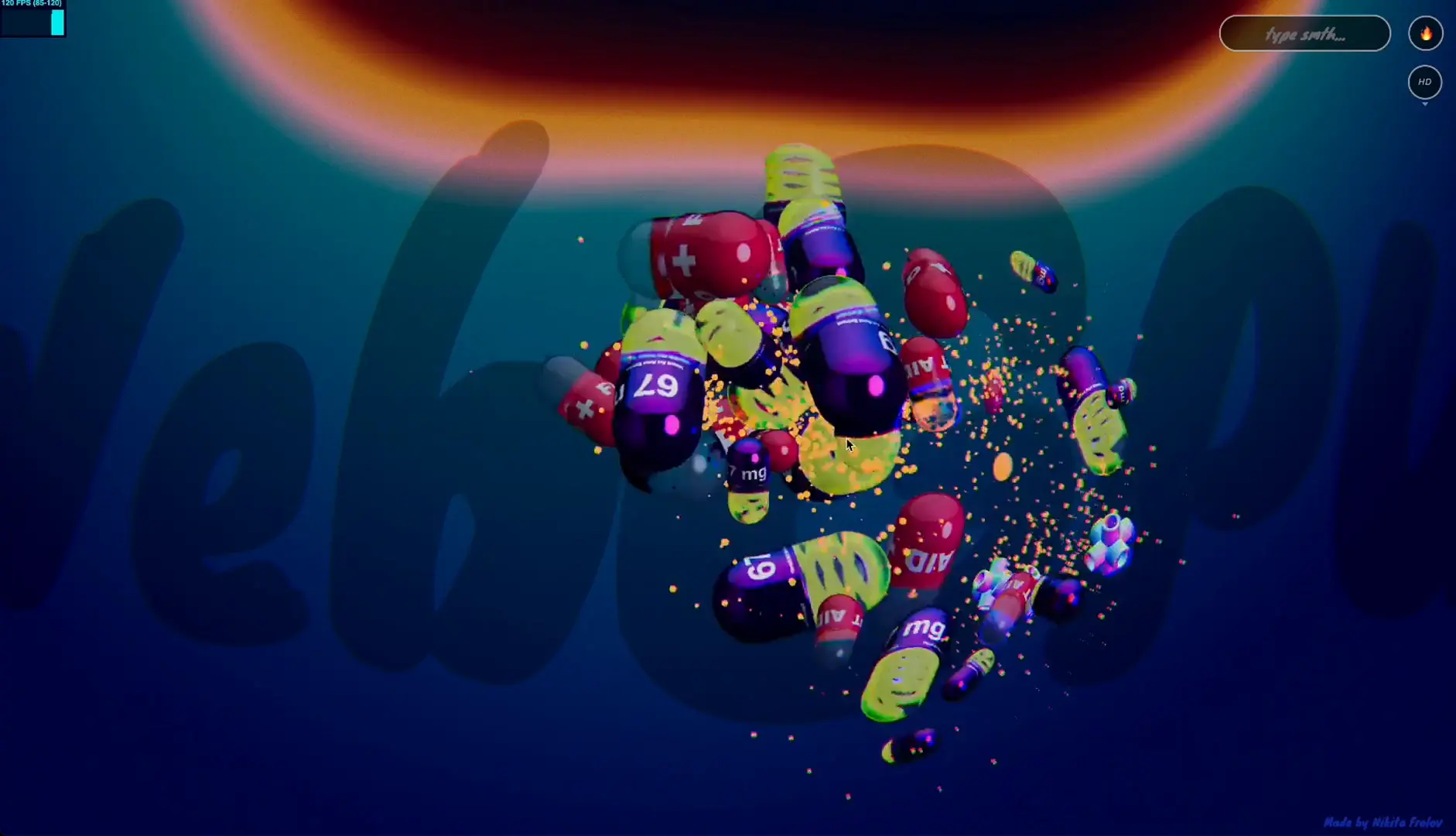
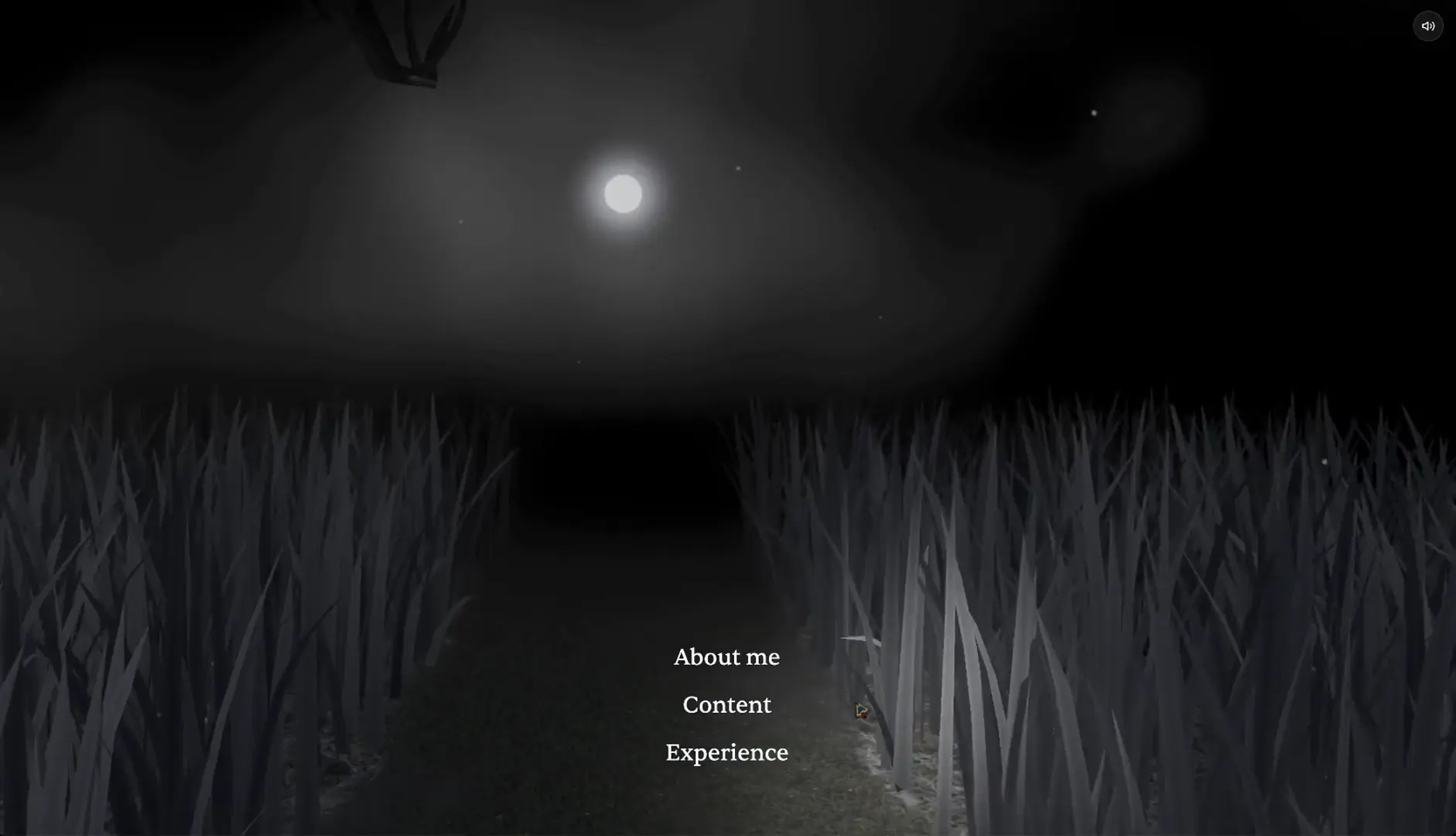
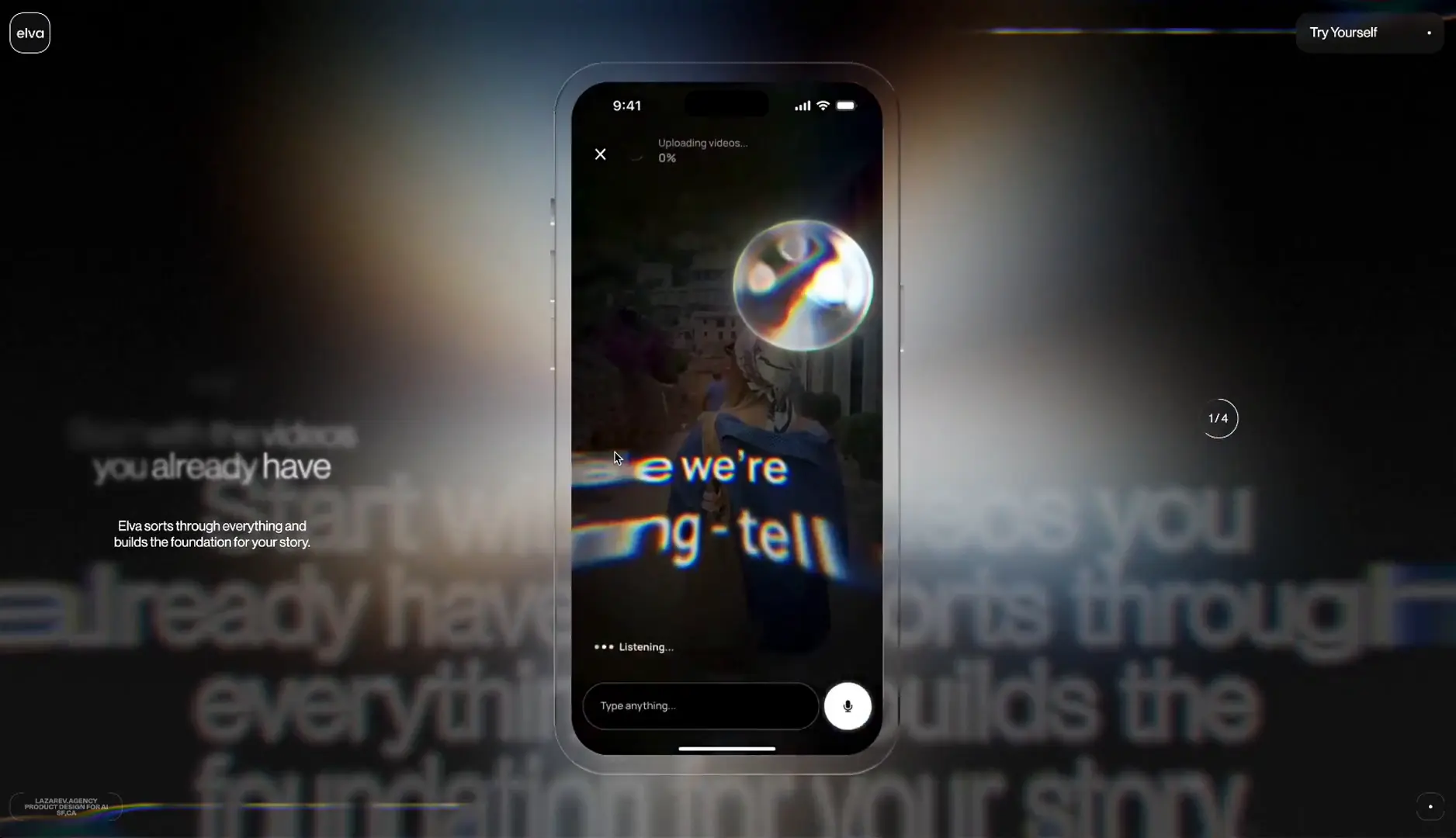
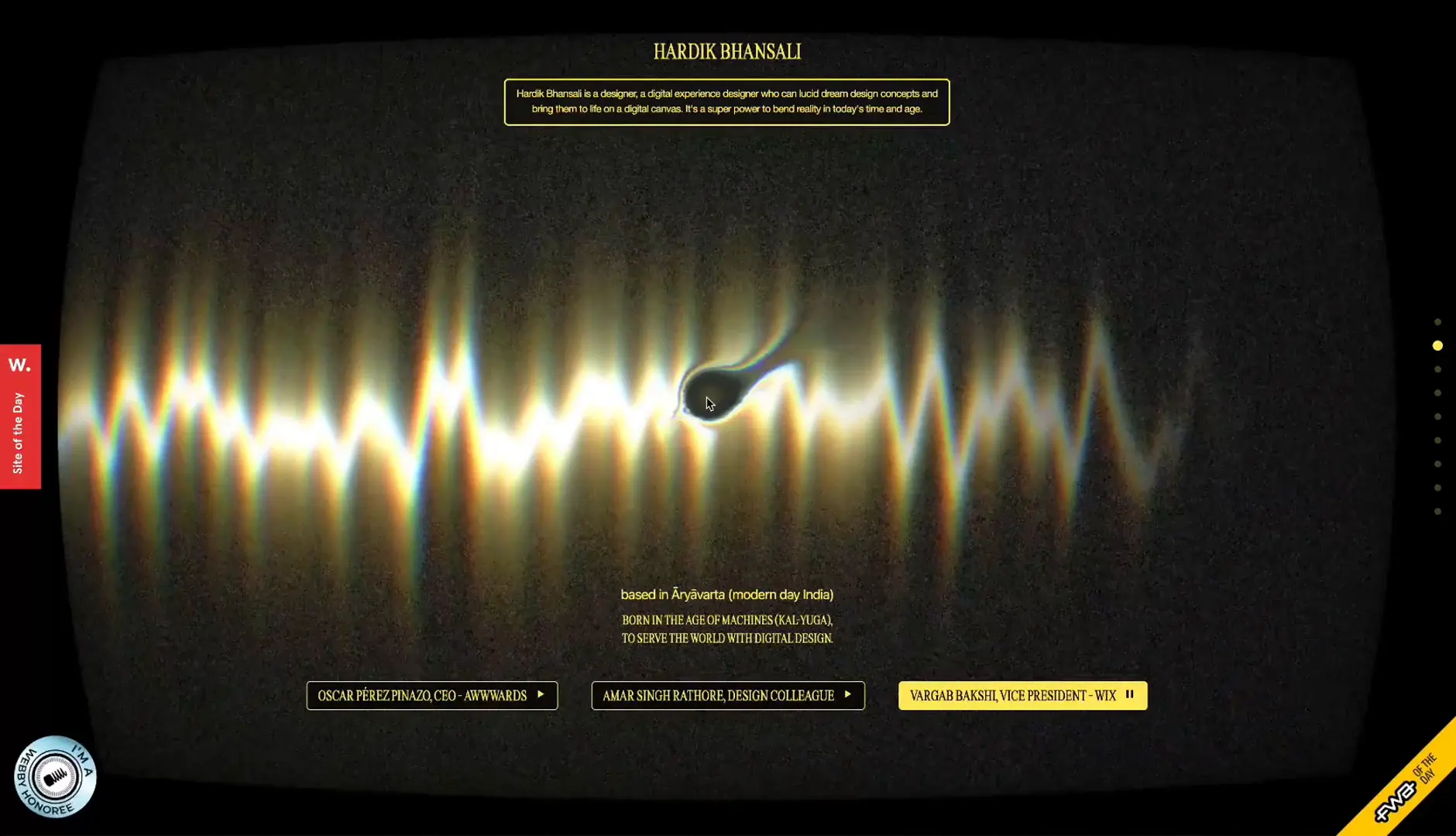
AndAgain: The Hover Reel Done Right A London and Liverpool studio's site that opens with a monospace clock and a grid of eight projects, each thumbnail waking up on hover with a clip of the real thing. The asset choreography reads cleanly from the network tab. Quiet build, careful pacing.
Arrival.Space: Claim a URL, Get a 3D Space on the Web A browser-native platform where you claim a URL slug, drop in a gaussian splat or glTF, and have visitors walk through it. No app, no walled garden.
Smooothy: A Slider Built to Sit Under Your WebGL Scene Federico Valla's Smooothy is a tiny TypeScript slider that exists because every other carousel synced badly with WebGL. Drag through Toast and Fish but no Head while current, target, and parallaxValues tick out in real time, ready to feed your shader uniforms.
Semantic Globe: A WebGPU Earth That Understands Plain English Type a vibe like "somewhere cold and lonely" and watch a 3D Earth pin the answer. The text embeddings and the planet shaders share one GPU in one browser tab, no server in the loop. Joshua Lochner's quiet flex of what WebGPU can do when nobody is looking.
Artisans d'Idées: Treats Shadow as a Material Open Artisans d'Idées and you get a black screen with one instruction: click to illuminate. What follows is a horizontal Three.js journey rendered almost entirely in shadow, with audio coupled to camera state instead of a clock. Built by Paris studio Immersive Garden. Worth opening devtools for.
Crystal Words: A Snowflake for Every Word You Type Type a word. Watch it break into a six-fold ice lattice and hang in the air like a frozen sentence. Crystal Words is a small WebGL piece by Ming Jyun Hung that grows a structurally unique snowflake from whatever you put into the keyboard.
Cartier Watches and Wonders by Immersive Garden Six Three.js alcoves, one per watch. Horizons drift, water laps, mirrors get theatrical. Immersive Garden turned Cartier's Watches and Wonders pavilion into a scrollable digital twin, with hidden gestures in every scene and a Mooders score doing narrative work.
Reze Engine: A Hand-Rolled WebGPU Renderer for MMD Characters A hand-rolled WebGPU renderer for MMD anime characters, written in pure TypeScript with exactly one runtime dependency. Toon outlines, rim light, IK, and Bullet physics built from scratch, plus a tutorial that walks from Hello Triangle to a fully rigged, dancing character.
Lore: Hand-Rolled WebGL by darkroom.engineering Lore's landing page is the rare marketing site that earns its WebGL canvas. darkroom.engineering, the studio behind Lenis, wires GL into GSAP timelines for a logo-forward hero that is small, sharp, and worth reading the source of.
Weisdevice: A Glitchy Three.js Island With a Playable DJ Deck Wei's portfolio drops you on a tiny island with a half-broken robot, a Gameboy, and a DJ deck that refuses to play clean loops. Three.js with GLSL and GSAP up top, smart performance choices underneath: raycasting at 30 FPS, render loop paused on inactive views, assets tiny and lazy-loaded.
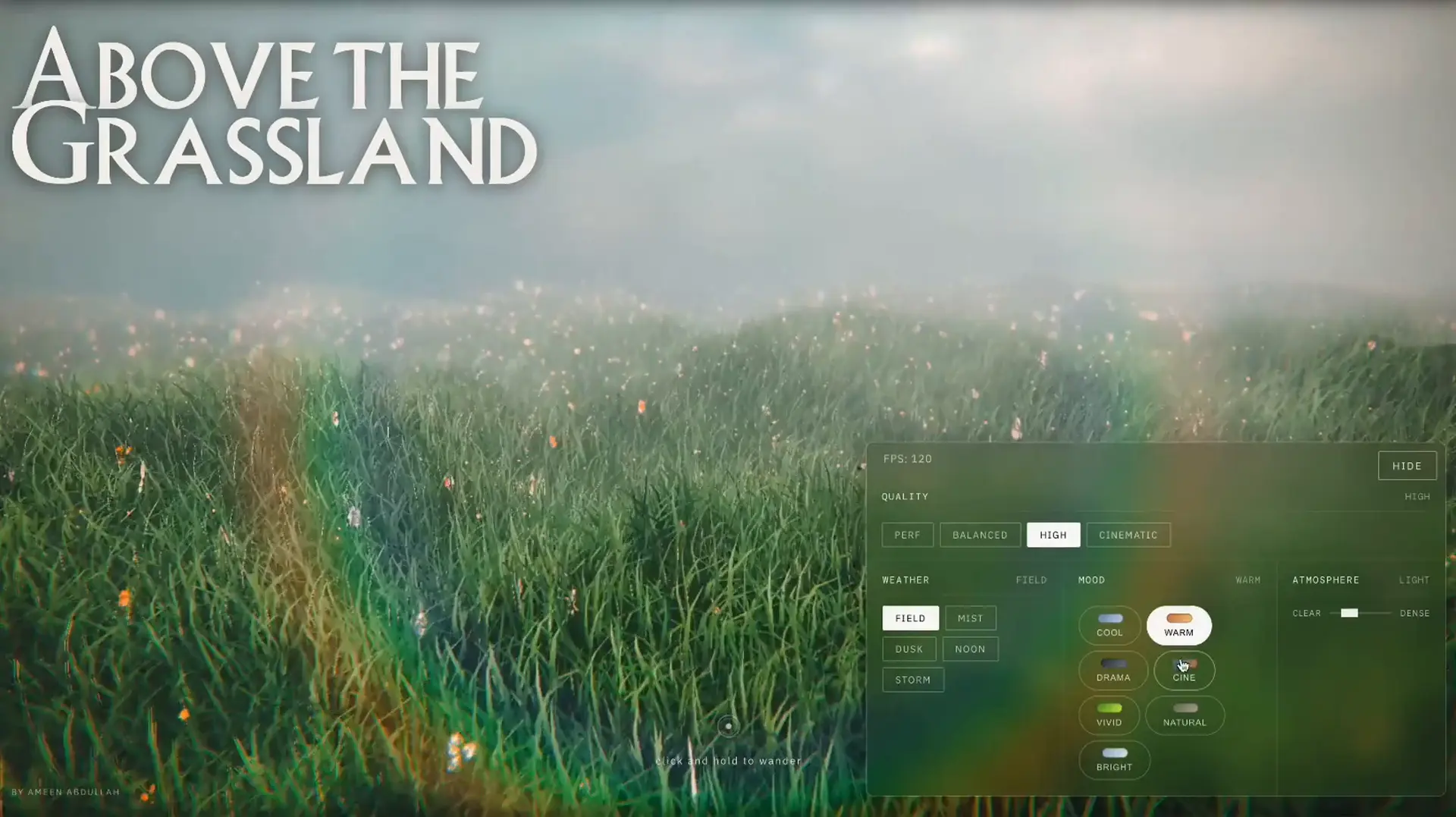
Ameen Abdullah's Portfolio Turns the Browser Into a Stage A WebGPU sakura scene anchors the hero, Vue drives the page, and a second WebGL layer paints mini scenes into textures aligned with the DOM. Off-screen blocks pause their work. Subtitles arrive in Japanese. A portfolio that behaves like a place rather than a CV.
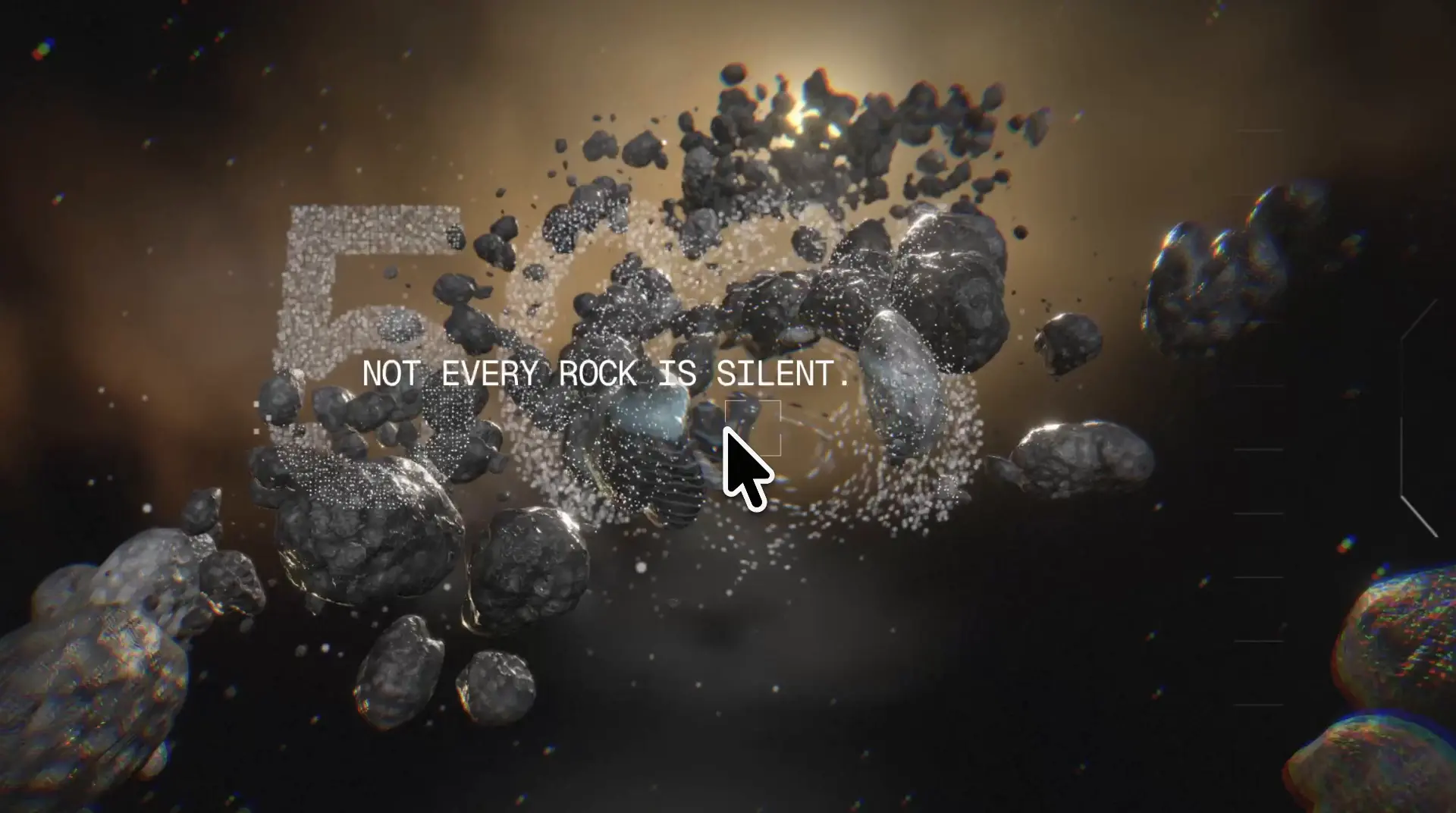
Netquel: Multiplayer Space Combat Built on Rust, WASM, and WebGL You start as a dot in dark space, mine asteroids, and watch your ship grow into a fleet trailing behind you like ducklings with laser cannons. Softbear's Netquel runs entirely in Rust, compiled to WASM, rendered through WebGL, with no install and no JavaScript on the hot path.
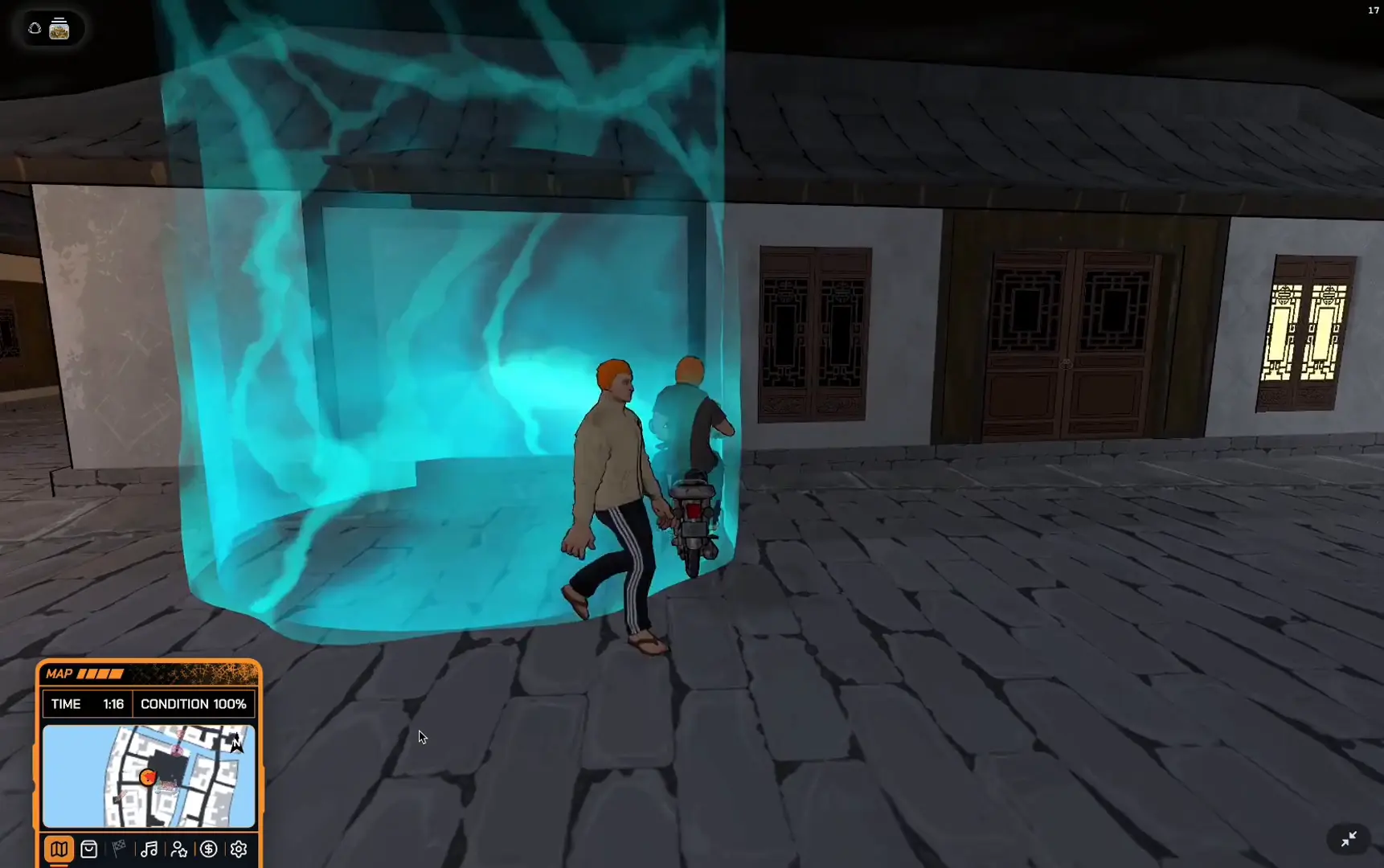
A Yurok Village in WebGL, Built From LIDAR Scans CyArk's Tapestry tour of Sumêg Village drops you into a Yurok ancestral village above the Pacific, rendered from survey-grade LIDAR captured in 2021. Cedar plank houses, sweat house, dance house. Guided narration first, then WASD and free run of the place.
Gaussian Splats on a Revit Model in 600 Lines of JavaScript Michael Beale's gaussian-splats-lmv overlays photoreal XGRIDS captures onto a Revit model inside the APS Viewer. Same camera, same section planes. Three modules, roughly 600 lines of JS, a 65,536-bucket counting sort in a Web Worker, and 32-byte splat records doing the heavy lifting.
AUDIOLAB: A React Three Fiber Audio Visualizer Built Like a Radio AUDIOLAB is Abel Gudino's audio visualizer dressed as a radio. Load a track, watch the geometry react. React Three Fiber handles the scene while React owns the playback state, so the FFT data and the UI share one coherent tree instead of fighting over it.
NullGraph: A Data-Oriented WebGPU Rendering Framework Vikas Kumar Singh's NullGraph drops the scene graph and streams flat ArrayBuffers straight to the GPU. Strange attractors, Hopf fibrations, curl-noise fluids, and a test engine that lets you swap memory layouts mid-flight to watch the frame times move.