Vercel Opens vgpu 0.3.1 for WebGPU Across Browser, Node, and CI Vercel has open-sourced vgpu 0.3.1, a small TypeScript WebGPU layer with typed WGSL modules, shared browser and Node APIs, deterministic mocks, CLI validation, examples, and agent-facing documentation.
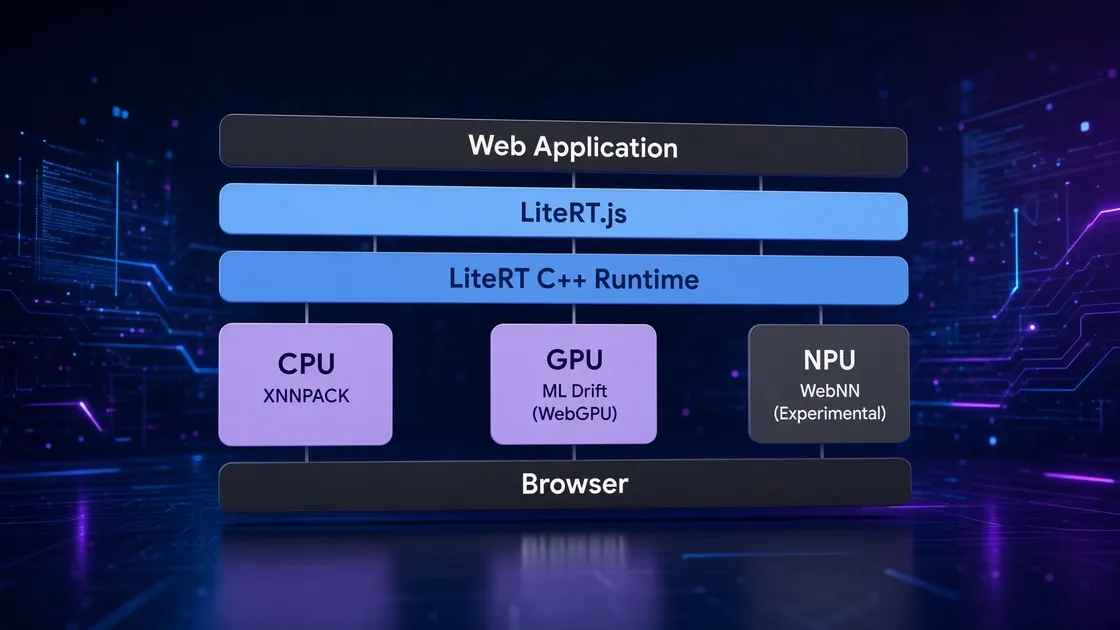
Google Brings LiteRT Inference to the Browser With WebGPU Google has brought its LiteRT on-device inference stack to the browser, with XNNPACK on CPU, ML Drift over WebGPU, and experimental WebNN support for NPUs.
WASI-WebGPU 0.3 RC Takes GPU Compute Beyond the Browser The Phase 2 wasi:webgpu proposal has a 0.3 release candidate, mapping WebGPU-style GPU access into WASI for portable, sandboxed compute across servers, desktops, Android, and the web.
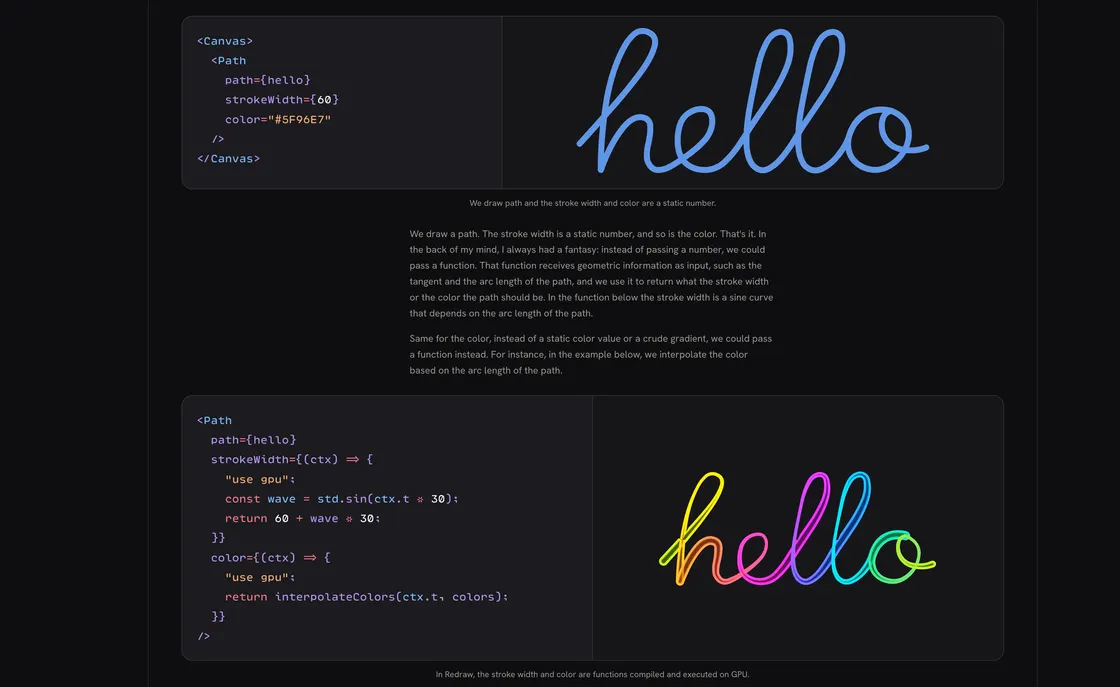
Redraw Brings WebGPU Shaders to 2D Paths William Candillon’s Redraw explores WebGPU-native 2D path rendering, with programmable Bézier geometry, variable stroke widths, vector feathering, and TypeScript shader functions.
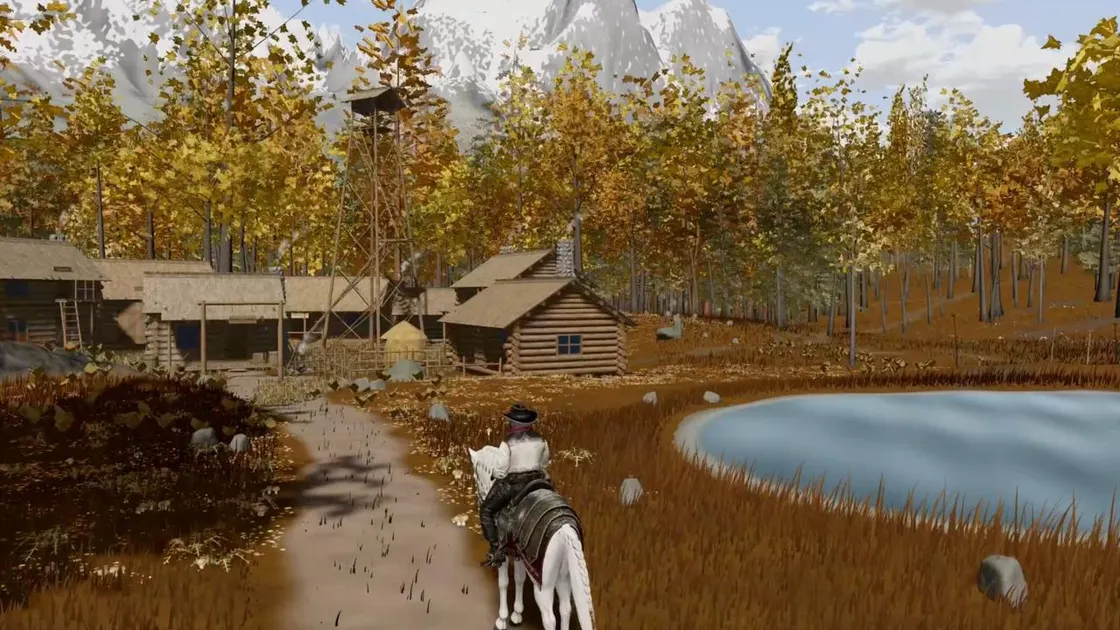
Kimi K3 Uses Three.js WebGPU for an AI-Built 3D Game Demo Moonshot’s Kimi K3 launch includes a notable WebGPU case study: an AI-built procedural 3D exploration game using Three.js WebGPU and GPU compute.
WebGPU Cluster Turns Browsers Into AI Inference Nodes Alexsandro Souza’s WebGPU Cluster turns browser tabs into shared AI inference nodes, with WebGPU hosts running RF-DETR or SmolVLM behind a simple HTTP API.
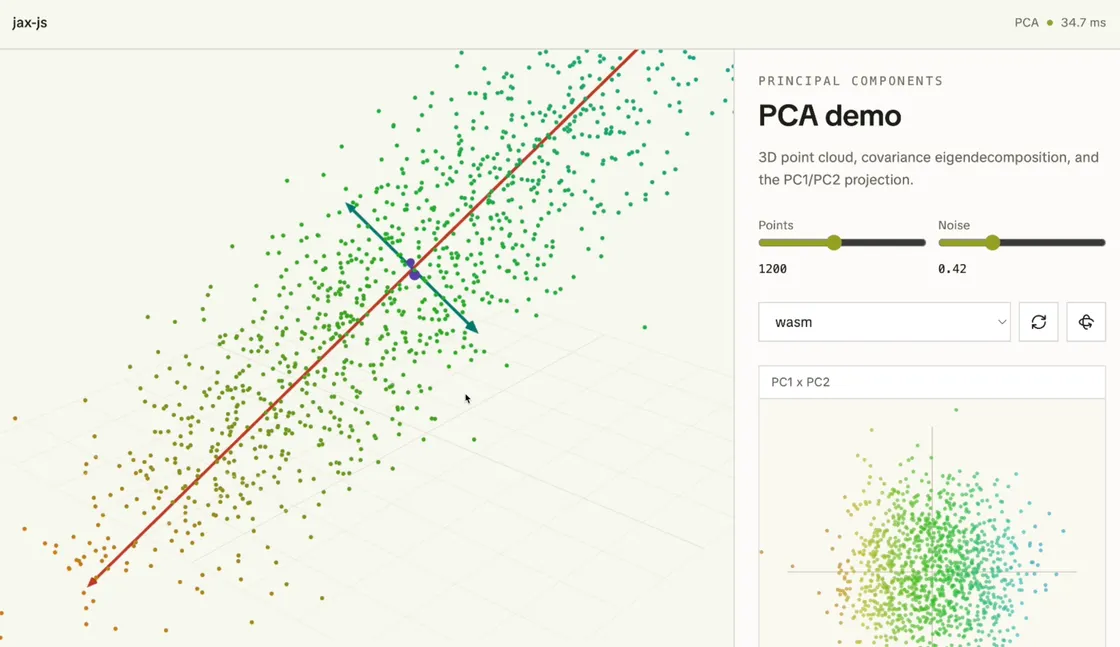
jax-js Brings JAX-Style ML Kernels To The Browser Eric Zhang’s jax-js is a pure JavaScript ML framework that compiles NumPy/JAX-style array code into WebAssembly and WebGPU kernels for client-side experiments.
GPU-Side Physics: A Three.js WebGPU Compute Demo Thousands of instanced bodies tumble and collide, with the entire physics step running on the GPU through WebGPU compute and Three.js TSL. No CPU round trip, no framerate flinch. A clean little workbench from Kevin Levron, built to inspect, tweak, and learn from.
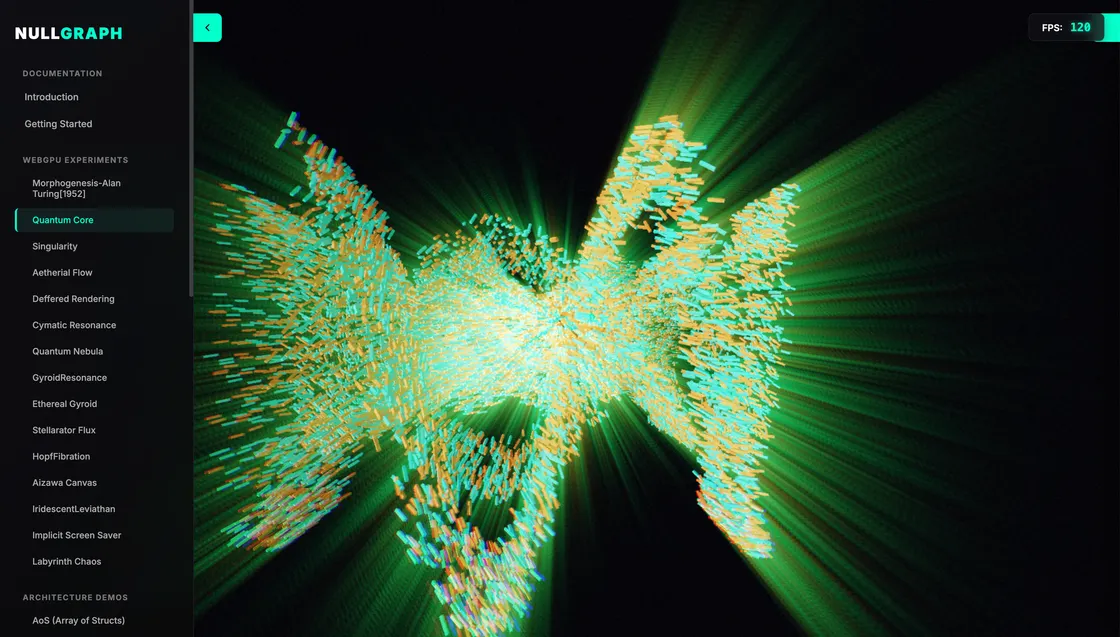
NullGraph: A Data-Oriented WebGPU Rendering Framework Vikas Kumar Singh's NullGraph drops the scene graph and streams flat ArrayBuffers straight to the GPU. Strange attractors, Hopf fibrations, curl-noise fluids, and a test engine that lets you swap memory layouts mid-flight to watch the frame times move.
ChartGPU: WebGPU-Powered Charts That Hold Up at a Million Points A WebGPU charting library that pans and zooms a million points without blinking. LTTB downsampling runs as a compute shader, hit-testing is GPU-accelerated, and each series ships as a single instanced draw. Line, area, bar, scatter, pie, candlestick. 97% TypeScript, 3% WGSL, MIT-licensed.
LFM2-MoE: An 8.3B Parameter Language Model Running Entirely in Your Browser via WebGPU Liquid AI's LFM2-MoE loads 8.3B parameters (1.5B active) and generates text client-side through WebGPU. No server, no API key. A hybrid convolution-attention architecture running Mixture-of-Experts inference in a browser tab, powered by Transformers.js.
False Earth: A GPU-Driven Procedural Planet Built with WebGPU, TSL, and Three.js An astronaut walks an alien planet that responds to every step. Over 1M grass blades, procedural terrain, and VAT-animated roses, all running in the browser via WebGPU compute shaders, TSL, and React Three Fiber.
DRIFT: A Million Particles, a Lost Astronaut, and AI-Generated Loneliness A lost astronaut records his diary in your browser. Over a million GPGPU particles shift with his mental state while AI generates fresh text and voice each visit. Ming Jyun Hung built something that feels alive and a little heartbreaking.
Softbody Tetris: A Squishy WebGPU Remake That Plays Different Niklas Niehus rebuilt Tetris with soft body physics running entirely on WebGPU via Three.js TSL. Blocks deform on impact, wedge into gaps, and create emergent gameplay the original never had. Fully playable in your browser.
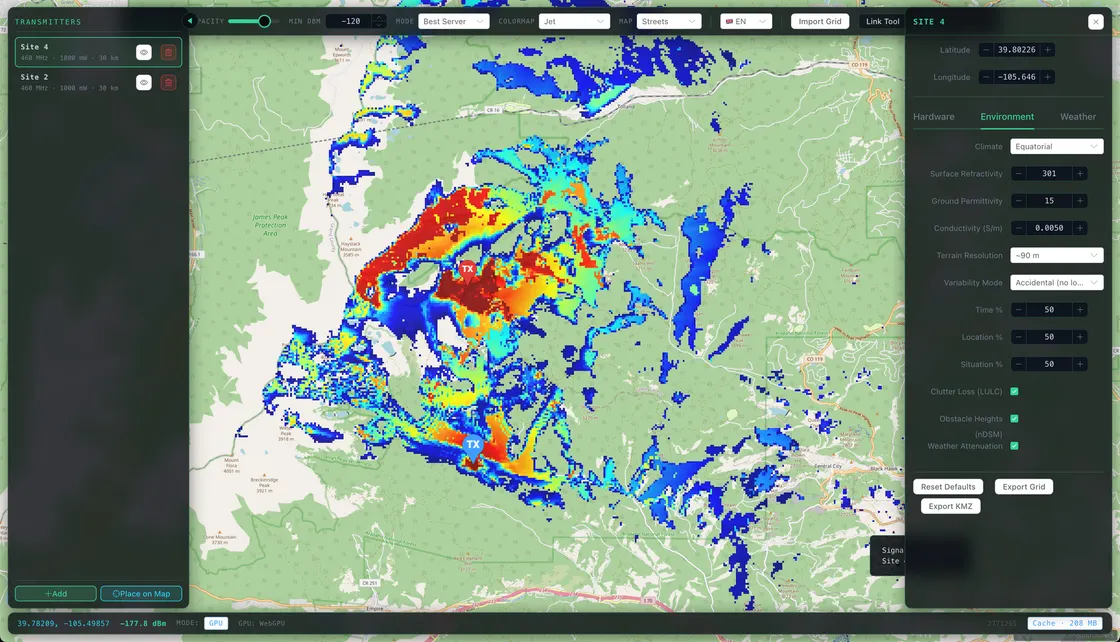
WebRF: The Longley-Rice Radio Propagation Model, Running in WebGPU Compute Shaders Roman Liutikov ported the Longley-Rice ITM algorithm, a real-world radio propagation model used in cell network planning, entirely into WebGPU compute shaders. 1,200 lines of WGSL, a two-pass radial sweep architecture, and coverage maps that actually respect terrain.
WebHeat: GPU-Powered Thermal Simulation for Any STL File A high school senior learned Newton's law of cooling in class, then built a full thermal simulation in the browser. Drop in any STL, watch heat propagate through voxelized geometry on the GPU. WebGPU compute shaders, React frontend, and a useRef trick that keeps it all from falling apart.