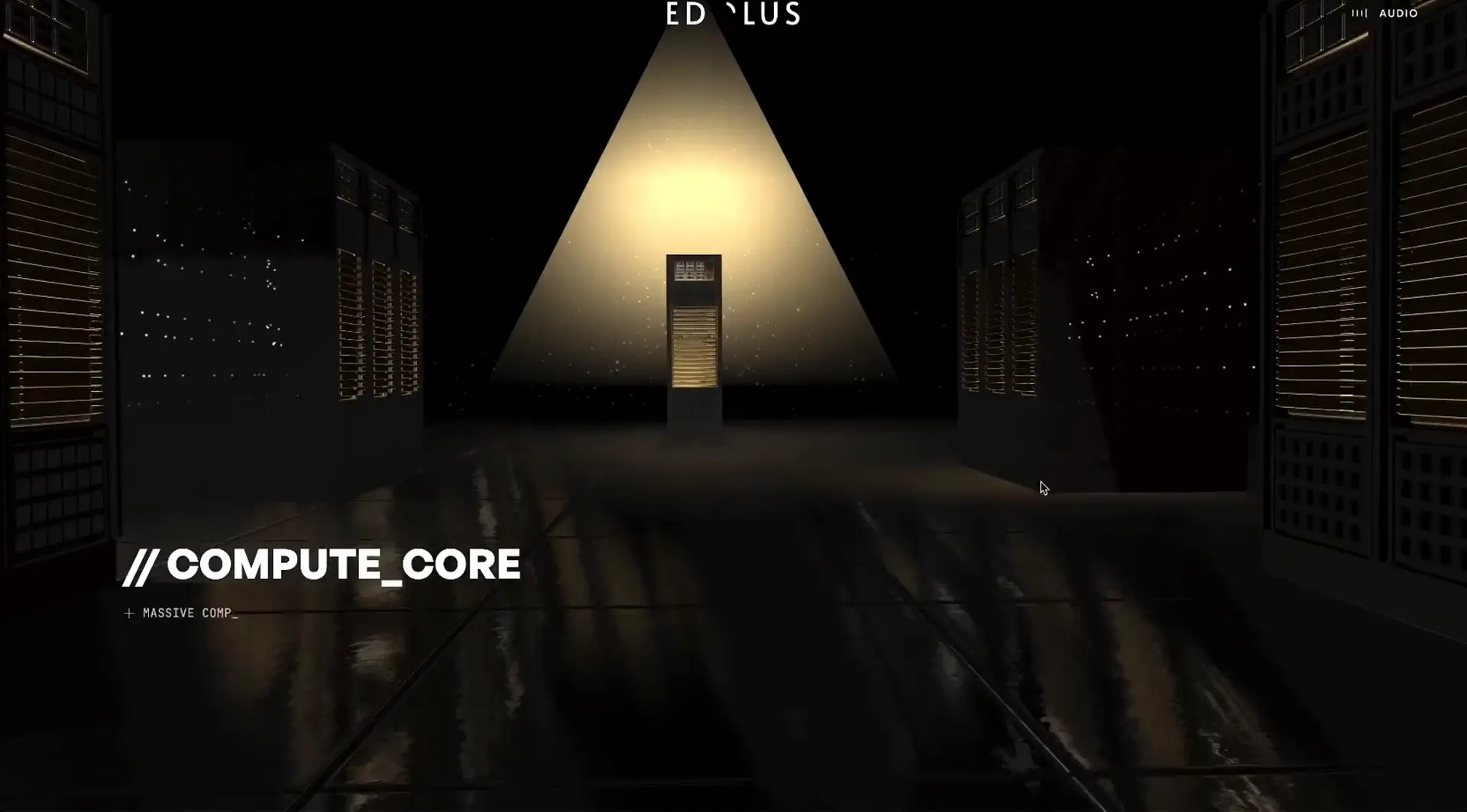
Igloo Inc: Crystal Growth Algorithms, Shader-Driven UI, and Volume Data Abeto built the Igloo Inc site entirely in WebGL, from procedurally grown ice crystals to shader-driven UI text. The particle footer alone, powered by custom VDB-to-browser volume data, is worth the scroll.
Galaxy Sim: Real-Time N-Body Galaxy Formation in WebGL Watch 20,000 particles collapse from random gas clouds into a spinning spiral galaxy, all running in your browser. The result is quietly mesmerizing.
gpu-curtains: A WebGPU 3D Engine That Syncs Shaders to Your DOM Martin Laxenaire rebuilt his DOM-to-shader library for WebGPU, and this time it's a full 3D engine. Lights, shadows, compute shaders, glTF support, and the same trick that made curtains.js useful: your HTML elements become shader geometry that scrolls and resizes like native DOM.
UNESCO's Virtual Museum of Stolen Artifacts, Rebuilt in 3D with NanoGL A WebGL museum you weren't expecting to need. makemepulse rebuilt 240+ looted artifacts in 3D using their in-house NanoGL framework and a generative AI pipeline that turns flat photos into textured models. Architect Francis Kéré designed the space. The subject matter does the rest.
MANA Yerba Mate: An Animated Shopify Store MANA Yerba Mate runs Three.js inside a Shopify storefront, rendering scroll-driven 3D worlds for each flavor alongside GSAP and Lottie animation layers. There's a playable game hidden in the footer.
Embedding Atlas: Apple's Open-Source Tool for Exploring Millions of Vectors in Your Browser Apple's Embedding Atlas renders millions of embedding points interactively using WebGPU (with WebGL 2 fallback), Wasm-compiled UMAP, and density-based clustering that runs in milliseconds. Open source, with React, Svelte, Jupyter, and CLI support.
SWOOOP: Low-Poly Biplane Flight in PlayCanvas A low-poly biplane circles a floating island, collecting gems while physics and ambient occlusion do the heavy lifting. Built in WebGL with PlayCanvas in just four weeks by a remote team across Athens and London.
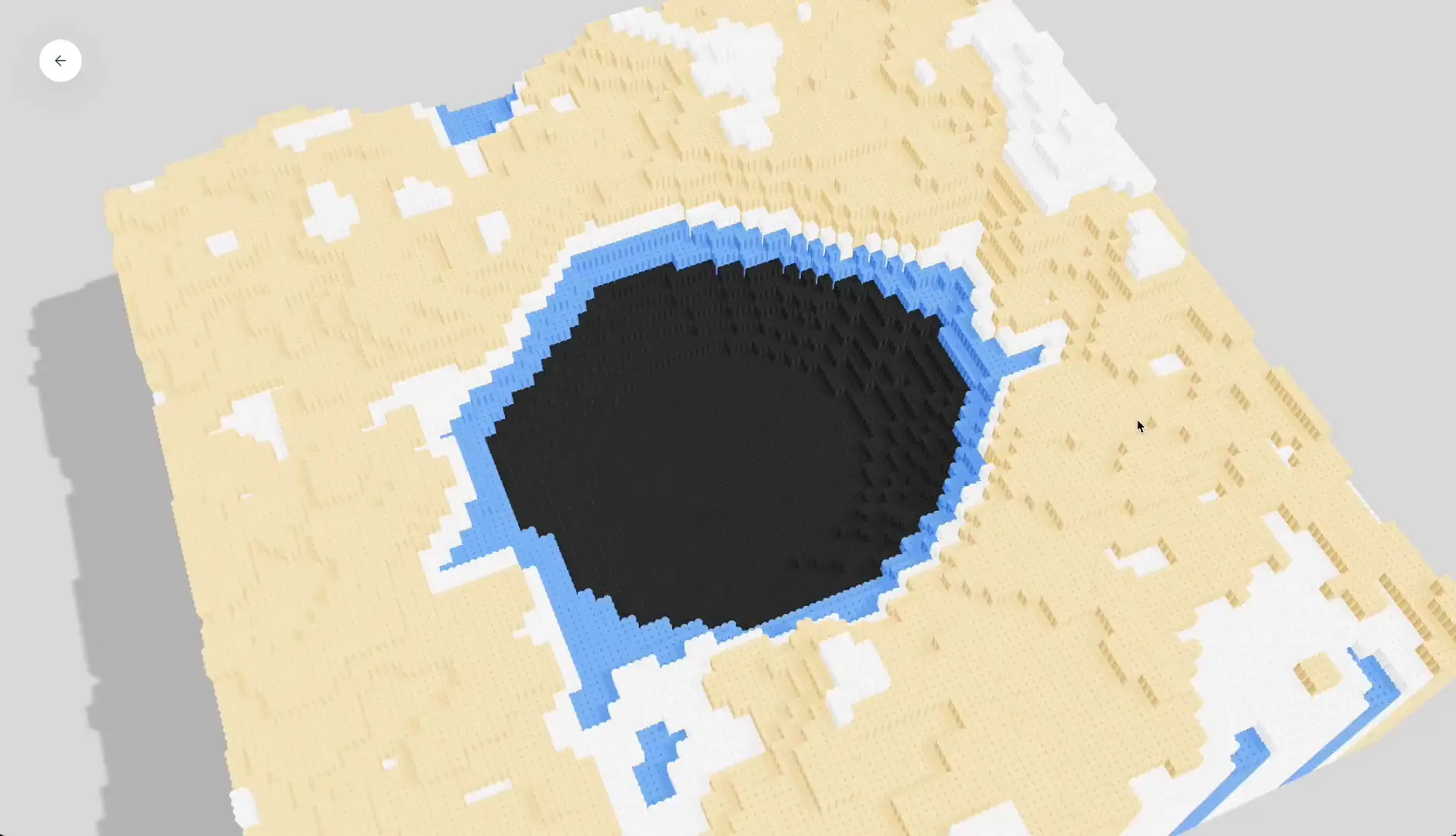
In The Clouds: Tallest Buildings as 40-Meter Blocks The world's tallest buildings rendered as stacked 40-meter blocks in Three.js. One block equals four floors. Pure client-side WebGL with procedural geometry. No map tiles, just height data and math.
Gauzilla Pro: Web-Native Gaussian Splatting for 4D Digital Twins A browser-based platform turning drone footage and smartphone video into photorealistic 3D scenes with AI-powered segmentation. Built on an open-source Rust/WASM renderer, no installs required. Construction teams are already using it for as-built documentation.
WebGPU Meets Zero-Knowledge: Can Browser-Based Proving Finally Work? zkSecurity integrated WebGPU compute shaders with StarkWare's Stwo prover and hit 5x speedups on constraint polynomial evaluation.
WebGPU Hits Critical Mass: All Major Browsers Now Ship It Chrome, Firefox, Safari, and Edge all ship WebGPU by default. Eight years of spec work finally pays off. Here is what changed, where the gaps remain, and why this matters for graphics and compute on the web.