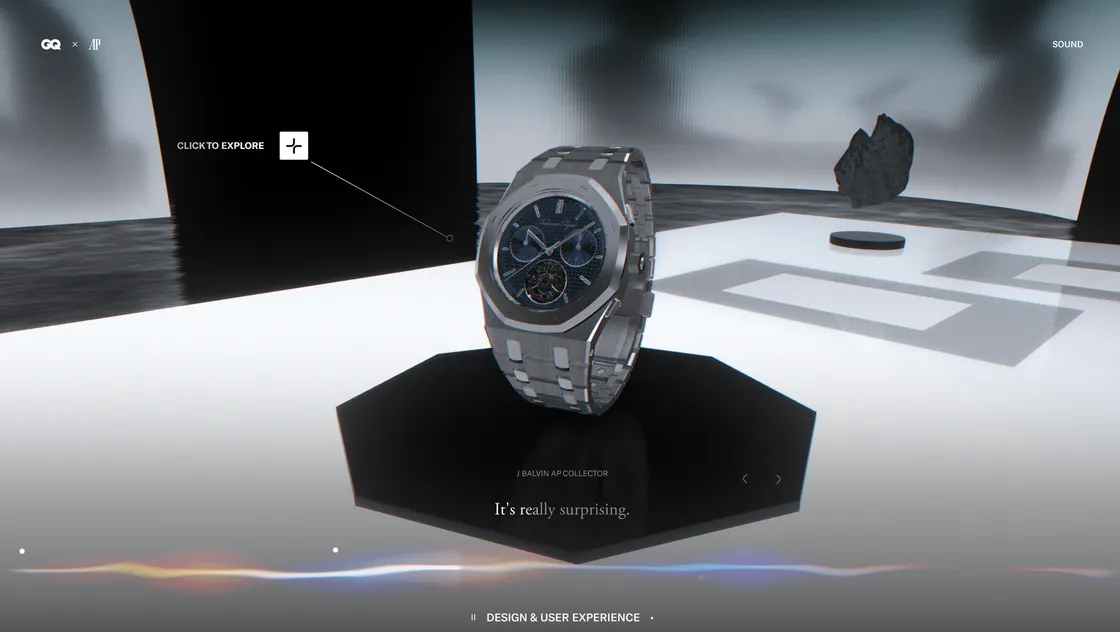
The Extraordinary Lab: A WebGL Tour of the Audemars Piguet RD Series Immersive Garden's scrollable look at Audemars Piguet's five RD prototypes: flying tourbillons at their actual thickness, sapphire catching light it shouldn't, and a camera with the taste to stand still. Nuxt on the shell, Blender on the geometry, WebGL tying the room together.
Git City: GitHub Profiles as a 3D Pixel-Art Skyline A sprawling 3D pixel-art city viewed from above, where each skyscraper represents a GitHub developer with height set by contributions and lit windows mapping to recent activity.
WebPhysics: A WebGPU Implementation of Augmented Vertex Block Descent Jure Triglav ports the 2025 AVBD solver onto the GPU: stacks that settle instead of jitter, piles with opinions about mass, and an LBVH broad phase feeding colored primal sweeps in parallel. The reference demo is CPU-serial. This one runs in a browser tab.
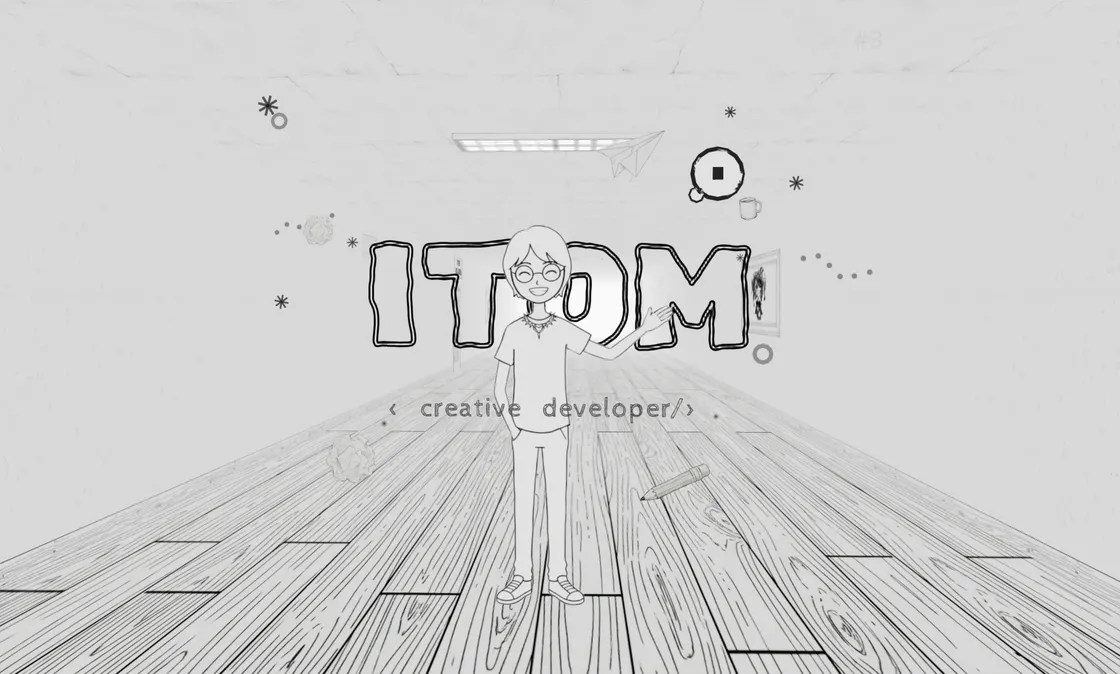
A Paper Tear, a Hand-Drawn Corridor, and Sketches That Finish Themselves A sheet of paper rips open and drops you into a hand-drawn corridor where pencil-sketched frames paint themselves in as you walk up to them. The kind of small site that rewards a slow look around.
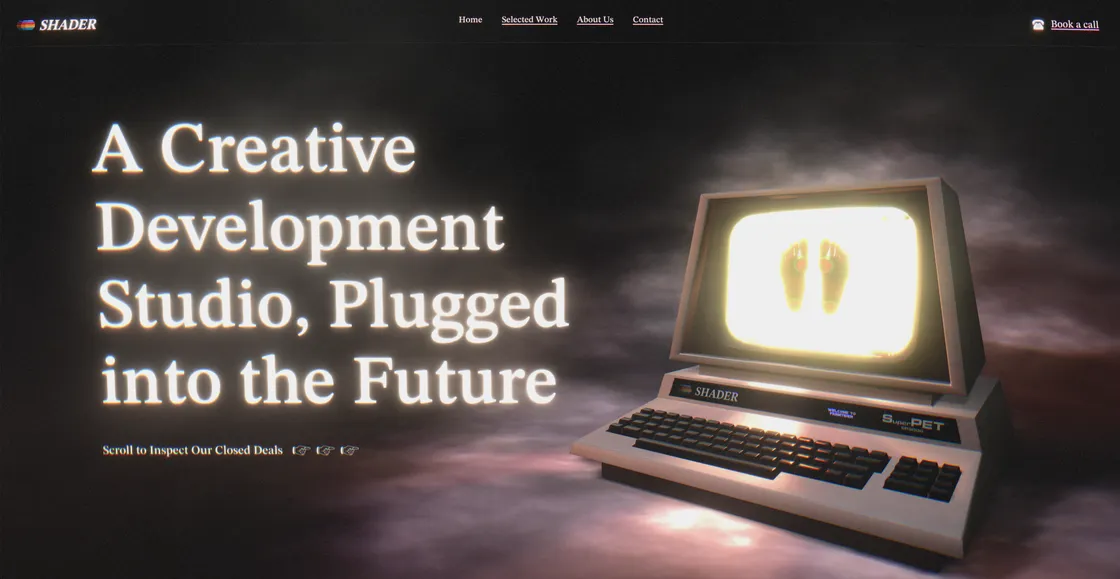
Shader.se: An 80s Corporate Tape Rendered in WebGPU A Swedish studio's landing page done up like a 1987 training reel, with chunky type and confident geometry giving way to scene transitions that only make sense on a modern GPU. Built with Three.js on WebGPU and shaded with TSL.
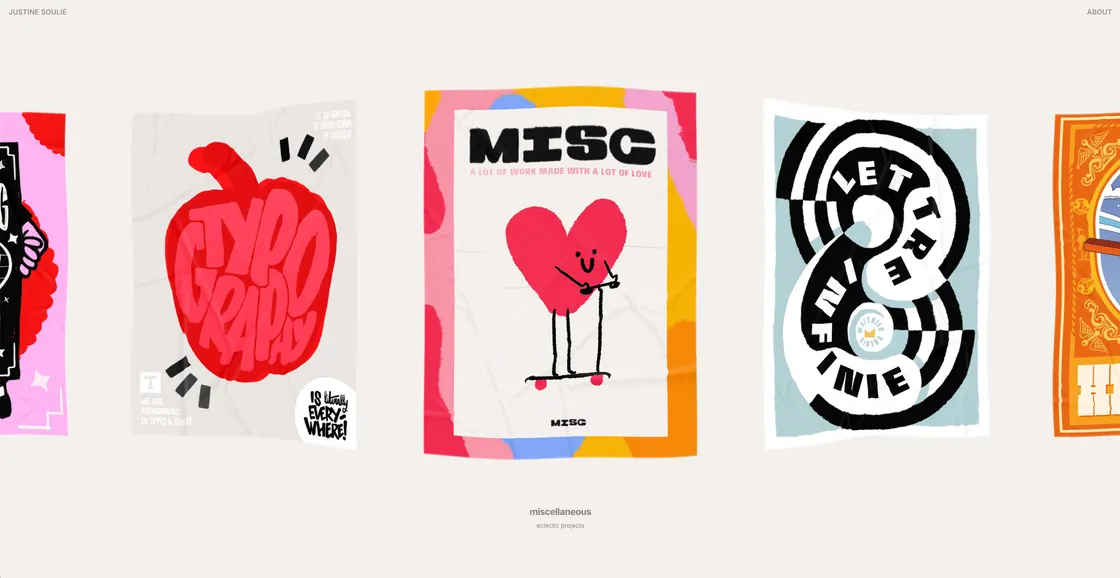
Justine Soulié's Portfolio: A WebGL Site Where Illustrations Are the Interface Every illustration on Justine Soulié's portfolio is a live WebGL scene with its own micro-interactions. Built by Patrick Heng using OGL, scroll physics, and custom shaders, the canvas isn't decoration. It is the UI.
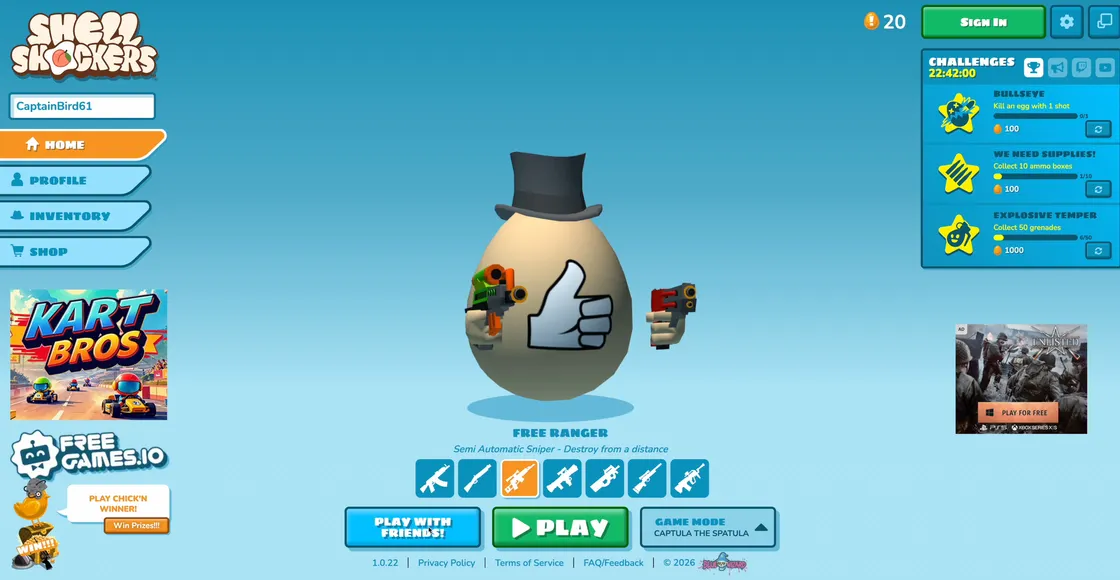
Shell Shockers: A Full Multiplayer FPS, in a Browser Tab, Starring Eggs Sentient eggs with shotguns, pastel arenas, and yolk physics, all running on Babylon.js at 60fps in a cold browser tab. Two hundred million players deep and still the best argument that the web can, in fact, host a real shooter.
Ad-Deir Monastery in WebGL: CyArk's Tapestry Takes You Inside Petra CyArk's Tapestry rebuilds Petra's Ad-Deir Monastery from LiDAR and photogrammetry, then hands you the keys. A narrated seven-scene tour on a high-res textured mesh, with a free-explore mode sharing the same source of truth. Restrained engineering dressed up as a field trip.
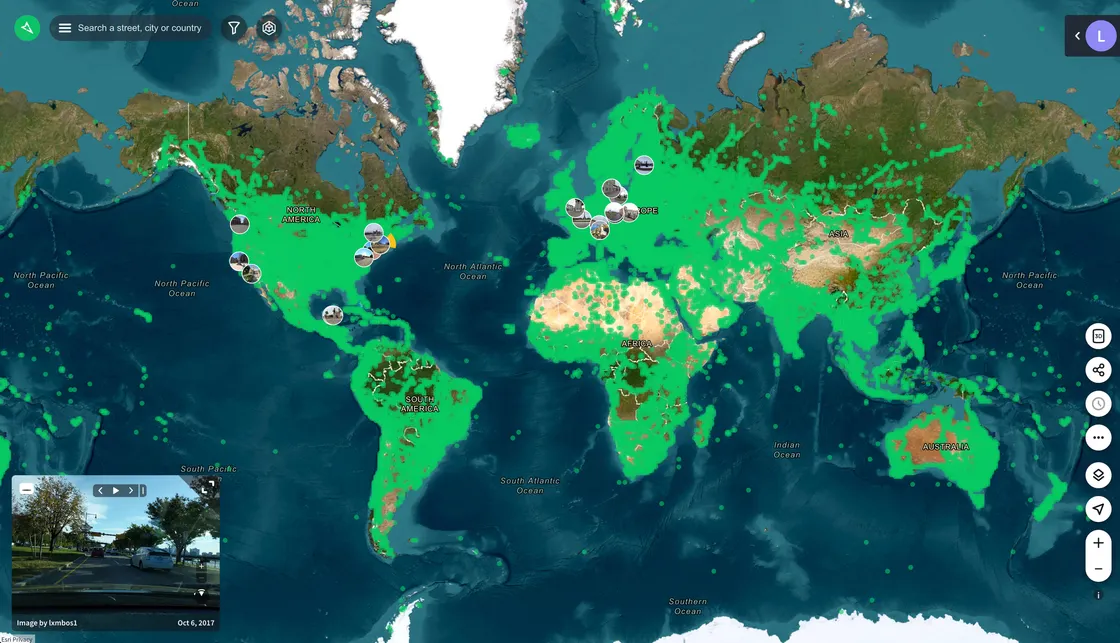
Mapillary: A Street View Stitched Together by Strangers Hundreds of millions of crowdsourced street photos, blended into a navigable 3D world you can pan through like a panorama. Built on mapillary-js, an open source TypeScript and WebGL library by Oscar Lorentzon. Point clouds, undistorted camera frames, and an S2-cell navigation graph under the hood.
Hydra: A Livecoded Video Synth Built on WebGL Framebuffers Olivia Jack's Hydra turns the browser into a modular video synth. Chain oscillators, kaleidoscopes, and webcam feeds into recursive GLSL patches, then pipe the output to another browser over WebRTC. Type a function, hit Ctrl+Enter, watch the pixels misbehave.
Hatom: Five-Phase Griffin Mythology Rendered in WebGL Immersive Garden built a five-chapter WebGL narrative for Hatom where a griffin hatches, armors up, and expands across planets. Three.js, progressive asset loading, and sound design by Ben Lukas Boysen. Awwwards SOTD, November 2024.
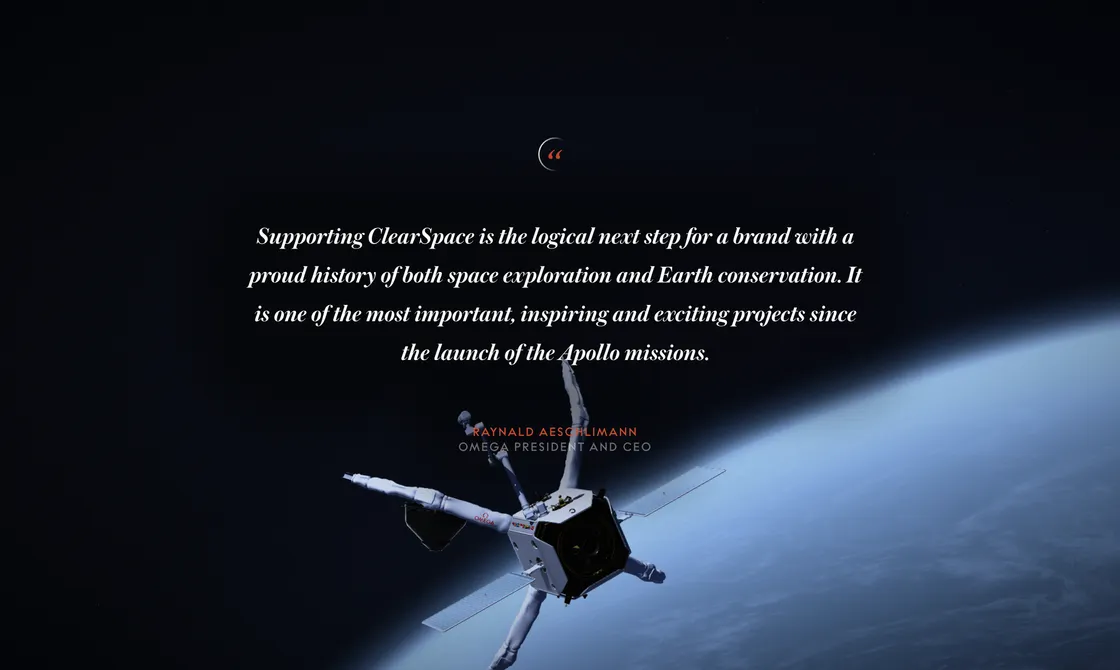
Omega Clearspace: Scroll-Driven Orbital Debris in Three.js Immersive Garden built a scroll-driven WebGL experience that puts you in orbit alongside 36,500 pieces of space junk. Wireframe-to-render transitions, spatial audio, and a four-armed capture vessel that makes it feel like an elegant unfolding of a problem.
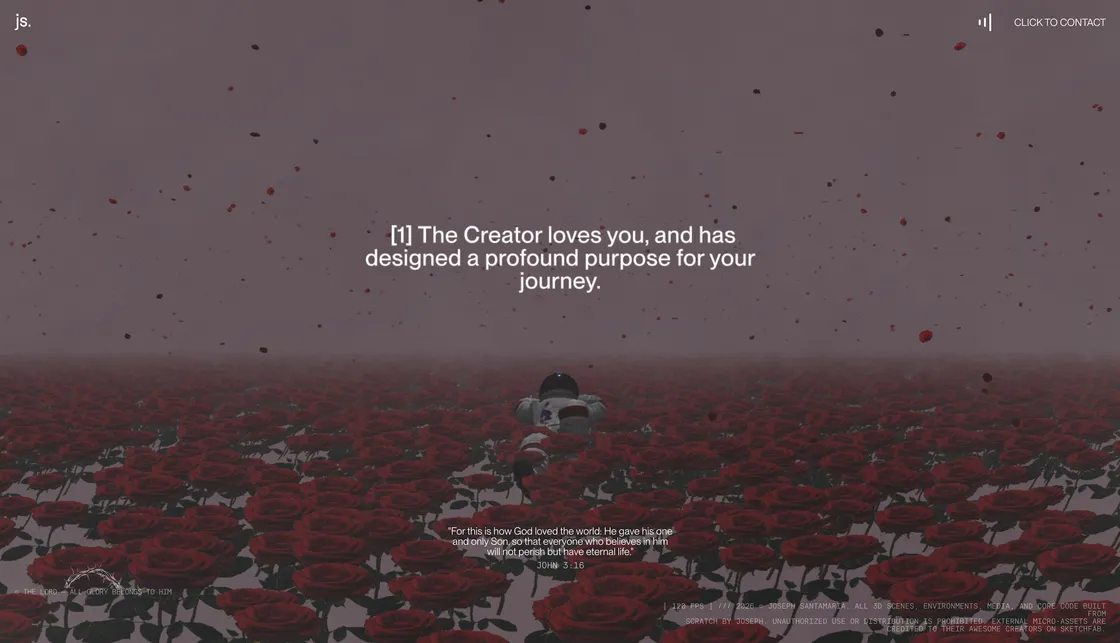
Joseph Santamaria's 3D Portfolio: A Scroll-Driven WebGL Environment Joseph Santamaria turned his portfolio into a full 3D environment you scroll through like a short film. Three.js, GSAP, hand-built scenes, and camera choreography that treats web performance as a design constraint. Built from Ecuador, no shortcuts.
Choo-Choo World: A WebGL Wooden Train Set Builder That Runs in Your Browser Lusion built a wooden train track builder in Three.js with a clay-dough art style, single-texture UV baking for day/night cycles, and a first-person ride-along camera. It ships as a PWA and runs smooth on mobile. Go stack tracks until physics gets nervous.
Find Your Way to Oz: The 2013 Chrome Experiment UNIT9 built a full Kansas carnival in WebGL for Disney, then destroyed it with a tornado shader borrowed from neuroscience. No physics engine. No framework. Just clever faking, spatial audio, and a three-month deadline. The source is open.
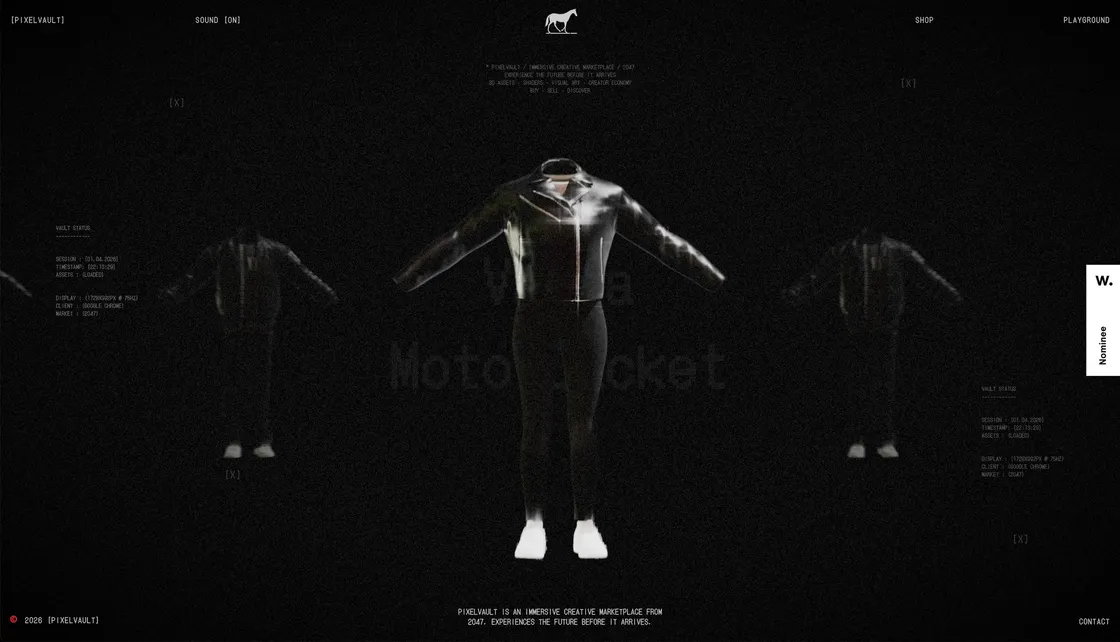
Pixel Vault: An Immersive Creative Marketplace from 2047 Pixel Vault drops you into a WebGL-rendered creative marketplace set in 2047. Bold geometry, fluid motion, and an interface that is the 3D layer, not decorated by it. Built by Karan Chouhan and Harshit Kumar Sahu, it's part storefront, part environment, and entirely worth exploring.