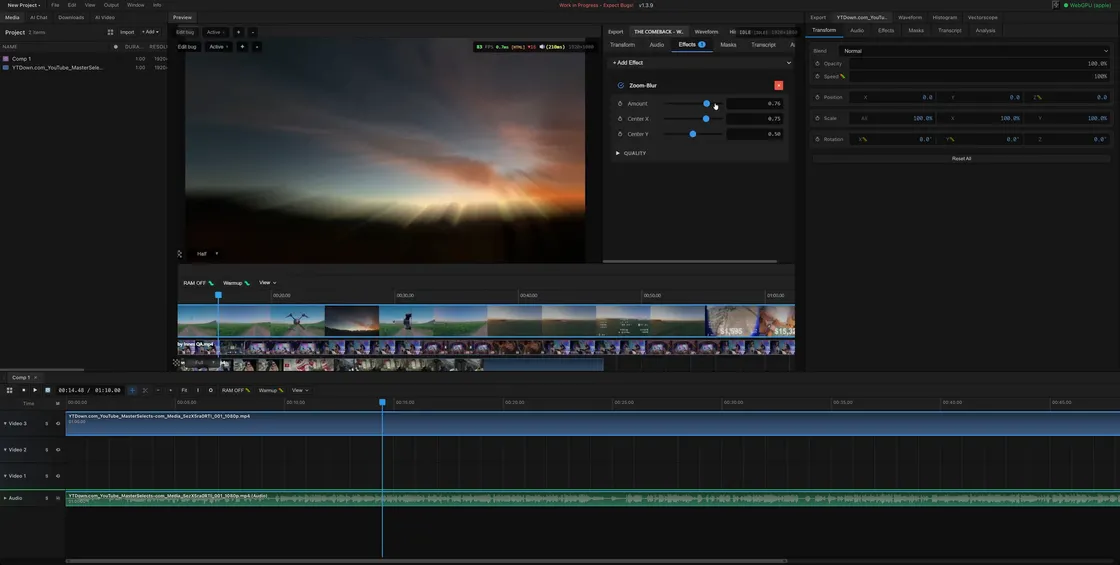


MasterSelects: A GPU-First Video Editor Built Entirely on WebGPU A full video editor running in the browser with zero CPU roundtrip. 37 blend modes in one WGSL shader, GPU-accelerated scopes, optical flow scene detection, and SAM2 segmentation on-device. 13 dependencies. MIT licensed.
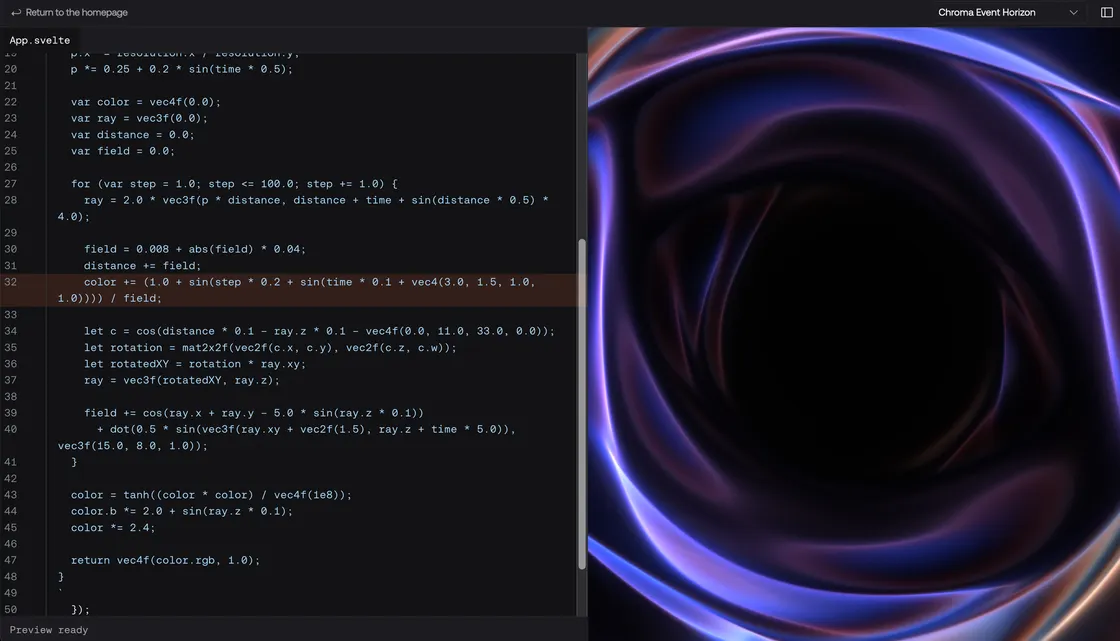
Motion GPU: A Minimal WebGPU Framework Shaders and Multi-Pass Pipelines Motion GPU strips WebGPU down to fullscreen shaders, multi-pass pipelines, and frame scheduling. Nothing else. DAG-based scheduler, composable render graph, and ping-pong slots.
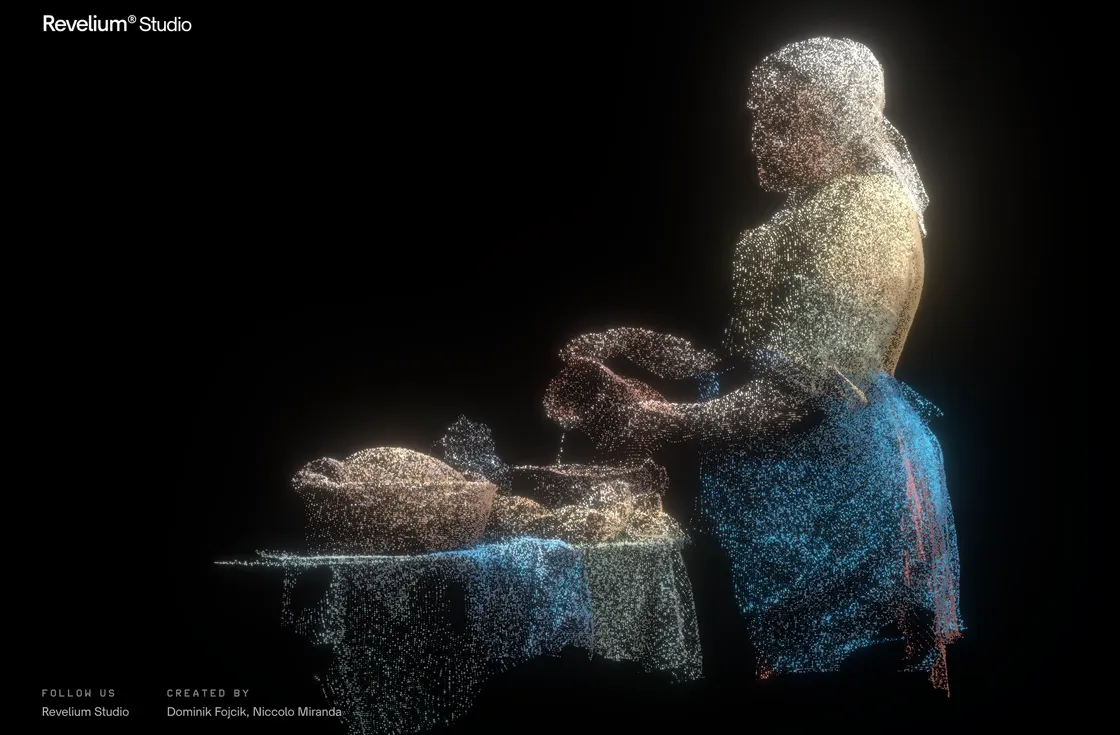
Vermeer's Milkmaid Dissolved into WebGPU Particles Revelium Studio broke Vermeer's 1658 Milkmaid into thousands of GPU-driven particles using WebGPU and Three.js TSL. Color-sampled from the original painting, the result is a particle cloud that somehow still holds the composition together. Worth a long stare.
Lacoste Members Experience: A Polo Shirt Co-Creation Merci-Michel built a Three.js polo customizer with triple UV maps, vertex-encoded metadata, and a pipeline that exports directly to manufacturing. It runs on mobile. It never stutters. Worth studying.
DRIFT: A Million Particles, a Lost Astronaut, and AI-Generated Loneliness A lost astronaut records his diary in your browser. Over a million GPGPU particles shift with his mental state while AI generates fresh text and voice each visit. Ming Jyun Hung built something that feels alive and a little heartbreaking.
Softbody Tetris: A Squishy WebGPU Remake That Plays Different Niklas Niehus rebuilt Tetris with soft body physics running entirely on WebGPU via Three.js TSL. Blocks deform on impact, wedge into gaps, and create emergent gameplay the original never had. Fully playable in your browser.
Penderecki's Garden: A Point-Cloud Memorial Built Using Photogrammetry Huncwot turned billions of drone-captured particles into a navigable WebGL garden for composer Krzysztof Penderecki. Custom GLSL shaders breathe with the music. Fully keyboard-accessible. One of the most ambitious Three.js projects we've seen.
OHIF Viewer: Clinical-Grade Medical Imaging Running on WebGL in Your Browser OHIF streams DICOM medical images straight into your browser. CT, MRI, PET fusion, tumor segmentation. All GPU-accelerated via Cornerstone3D's single shared WebGL context. No installs. Production-grade radiology tools built on open web standards.
Lume: GPU-Powered 3D Scenes Written as Plain HTML Elements Lume lets you build WebGL-powered 3D scenes using custom HTML elements. Lights, shadows, glTF models, and reactive updates, all in markup that works with React, Vue, Svelte, or vanilla HTML. No canvas wrangling required.
CHILE20: Active Theory's Three-World WebGL Campaign for Adidas Originals Active Theory built three scroll-driven WebGL worlds for adidas CHILE20, each with its own visual identity. 500K-poly garments baked down to mobile-friendly meshes, fluid cross-world transitions, and a lockdown-era campaign that still holds up.
Spacetime in Your Browser: A General Relativity Sandbox Built with BabylonJS Drop planets onto a deformable spacetime grid and watch gravity warp the mesh in real time. Built with BabylonJS and Ammo.js physics, Hitesh Sahu's simulation turns the rubber-sheet analogy into something you can actually play with. Collision sounds included.
Interactive 3D Sony Headphones Built with Spline and Webflow Lorenz Wieseke built a product page that actually earns your attention. Particle environments, animated audio wave rings, swappable colors, and convincing materials, all orchestrated through Spline and Webflow without a custom WebGL pipeline in sight.
BOIDS: A Parametric Playground for Emergent Flocking Behavior BOIDS simulates flocking through three local rules: separation, alignment, cohesion. No central control. Every parameter is exposed. Click to attract, right-click to scatter. Built in p5.js with texture support and video export.
Bear 71: An Immersive Documentary Where a Grizzly Bear Becomes a Data Point A grizzly bear's tracked territory rendered as surveillance grid. The NFB and Jam3 built a WebGL environment where Banff National Park looks like a living dashboard and coexistence feels like a systems problem.
WebRF: The Longley-Rice Radio Propagation Model, Running in WebGPU Compute Shaders Roman Liutikov ported the Longley-Rice ITM algorithm, a real-world radio propagation model used in cell network planning, entirely into WebGPU compute shaders. 1,200 lines of WGSL, a two-pass radial sweep architecture, and coverage maps that actually respect terrain.
Troika: The Three.js Framework That Solved WebGL Text Rendering Troika parses font files directly, generates SDF glyphs in a web worker, and patches any Three.js material with the right shader code. The result is crisp, antialiased 3D text that handles kerning, ligatures, and RTL layout without dropping frames.